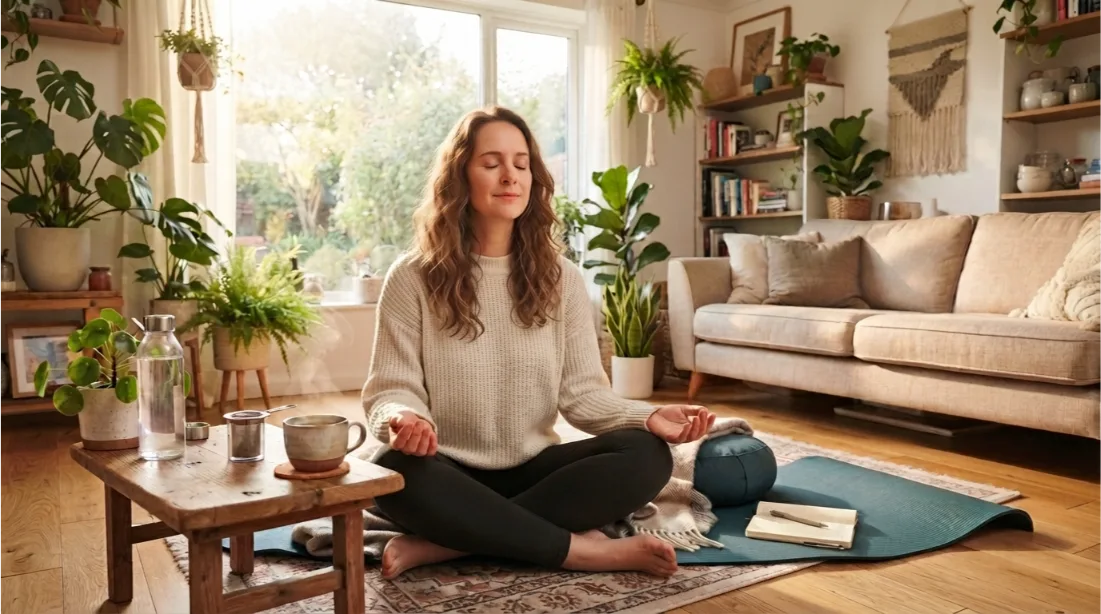
Do you ever feel like your mind just won’t slow down? Maybe you’re lying in bed at night, replaying conversations from the day or worrying about tomorrow. Or perhaps you’ve noticed you’re more irritable, tired, or just not yourself lately.
You’re not alone. Mental health conditions are among the most common health issues in the U.S.—more prevalent than diabetes or heart disease. One in five people experiences a mental illness each year, with depression and anxiety being the most common .
The good news? Mental wellness isn’t about avoiding all difficult feelings. It’s about building the skills to meet life’s challenges with support and resilience . Simple, daily habits can make a real difference in how you feel.
In this guide, you’ll discover:
- What mental wellness really means
- Evidence-based tips for supporting your emotional health
- Practical strategies you can start using today
Let’s explore how you can nurture your mental well-being starting right now.
What Is Mental Wellness?
Mental wellness is your ability to notice what you’re feeling, manage your stress, and stay connected to yourself and the people around you. It affects how you think, feel, and respond to everyday situations.

Mental wellness is made up of several key skills:
- Emotional awareness. The ability to notice what you’re feeling in the moment. Naming your feelings helps your brain calm down and makes it easier to understand what you might need.
- Cognition and clarity. Your ability to think clearly, focus, and solve problems without getting stuck in loops. When this area feels supported, decisions come easier.
- Stress management. How you handle pressure and recover afterward. It includes the tools you use on your own—like slow breathing or grounding and the support you get from routines or people you trust.
- Social connection. The ways you feel supported and cared for that strengthen your ability to cope. Even small moments of connection can improve your mood and lower stress.
- Self-compassion. The practice of being kind to yourself when you’re struggling. Instead of criticizing yourself, you acknowledge the challenge and remind yourself that you still deserve care.
The National Institute of Mental Health notes that mental health includes emotional, psychological, and social well-being. It’s more than the absence of a mental illness—it’s essential to your overall health and quality of life.
Why Mental Wellness Matters
Mental wellness affects more than just how you feel. It also shapes how you function every day.

When your mental wellness is supported, you can think more clearly, respond instead of react, and recover faster from stress. It doesn’t erase difficulty, but it does give you a greater capacity to handle it.
Mental wellness also plays a key role in physical health. Habits that support emotional balance—like movement, connection, or rest can have a tangible impact on the body. The National Institutes of Health (NIH) emphasizes that emotional wellness is the ability to successfully handle life’s stresses and adapt to change and difficult times.
Furthermore, mental wellness helps you have healthier relationships. It helps you set boundaries, stay present, and ask for support when you need it. These skills can protect you against burnout, loneliness, and emotional fatigue.
Daily Routines and Habits
Having a daily routine may be one of the most powerful things you can do for your mental health. Research shows that people with structured routines have lower levels of anxiety and depression than people who live without routines.

Why routines help: Following the same schedule day in and day out removes the burden of decision-making as well as the pressure and guilt that often go with it. People with a structured daily routine may experience improved sleep, increased productivity, less stress and anxiety, and good overall health.
Start with Your Sleep Schedule
Your body’s inner clock, or circadian rhythm, helps regulate mood and energy. Sticking to the same bedtime and wake time every day supports circadian rhythm and is the most critical part of a daily routine.
What the research shows: A 2025 study found that regular sleepers who were consistent with their bedtimes and wake times had 38% lower risk of depression and 33% lower risk of anxiety than irregular sleepers. Interestingly, even irregular sleepers who got the recommended hours of sleep just not at the same time every day still faced elevated mental health risks. It seems to be the consistent schedule that provides the benefit.
Create a Morning Ritual
Before the demands of the day begin, try to give yourself some intentional time even five minutes. The National Alliance on Mental Illness (NAMI) suggests good activities for a morning routine include the following:
- Easing into the day with sunlight, music, or light stretching
- Eating breakfast to fuel your body for the day ahead
- Moving your body to begin the day feeling good
- Practicing mindfulness through meditation or journaling
Research has shown that your morning mindset can shape your mood for the rest of the day. By starting the day with calm intention, you give your nervous system a fighting chance to stay regulated.
Make Your Bed
Something as simple as making your bed each morning can be a component of preventive mental health. Only 38% of adults make their bed daily, yet this simple activity gives you a quick win and the chance to experience some positive self-talk. The task clears mental clutter and gives you a sense of order and control.
End Your Workday on a Positive Note
Try to leave the day behind as you enter your personal life. A small boundary can feel like drawing the curtains on the day.
Mindfulness and Stress Management
Everyone feels stressed from time to time. But if stress lasts a long time a condition known as “chronic stress,” those “high-alert” changes become harmful rather than helpful .
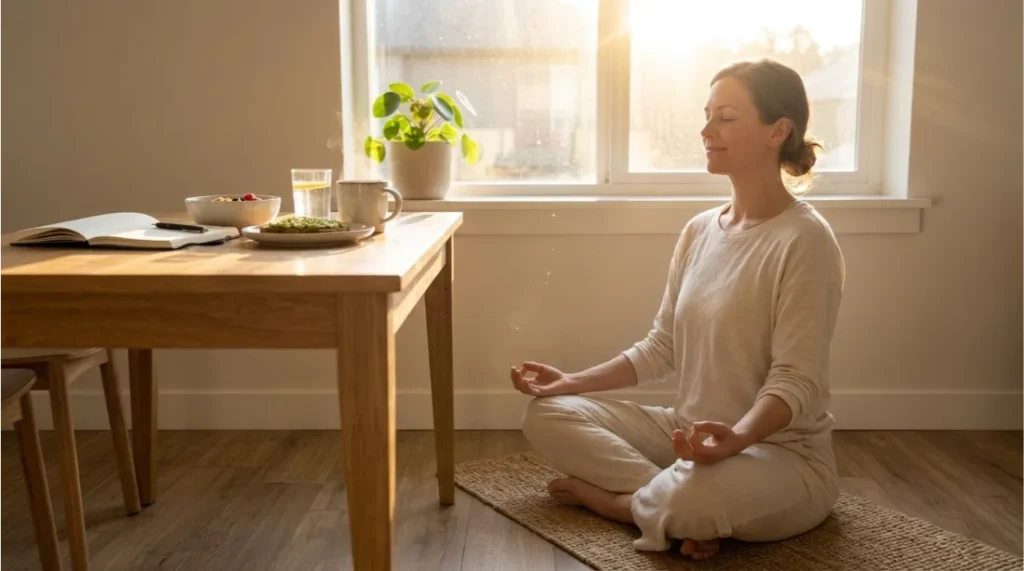
Person practicing deep breathing meditation to reduce stress
Practice Mindfulness
The concept of mindfulness is simple. This ancient practice is about being completely aware of what’s happening in the present of all that’s going on inside and all that’s happening around you. It means not living your life on “autopilot.”
Tips to be more mindful:
- Take some deep breaths. Breathe in through your nose to a count of 4, hold for 1 second, and then exhale through the mouth to a count of 5. Repeat often.
- Enjoy a stroll. As you walk, notice your breath and the sights and sounds around you.
- Practice mindful eating. Be aware of taste, textures, and flavors in each bite.
- Be aware of your body. Mentally scan your body from head to toe.
Manage Anxious Thoughts with Mindfulness
Imagine a street with a stream of cars driving by. Some cars might drive so slowly and quietly that you hardly notice them. Some might be loud and fast, causing you to notice them immediately. Like cars on the road, our stream of thought is similar. When a disruptive thought enters your mind, practice letting it pass without giving it attention, as if it’s just a loud car on the road.
You can also imagine leaves floating down a stream or clouds in the sky. Practice letting your thoughts pass by without becoming attached, getting stuck on them, or paying them too much attention.
Try Grounding Techniques
Anxiety doesn’t only show up in the mind. It’s also felt in the body through physical symptoms such as a tight chest or muscle tension. Grounding techniques can help quiet your mind and body.
Box breathing: This exercise can help relax a tight chest caused by anxiety.
- Breathe in for 4 seconds
- Hold for 4 seconds
- Breathe out for 4 seconds
- Hold for 4 seconds
- Repeat as many times as you’d like
Practice Present-Moment Awareness
When everything feels overwhelming, focus on the here and now. Take things one day, or even one hour, at a time. Ask yourself: What’s my next right action? Release the need to know how everything turns out and liberate yourself from having to handle everything right now.
Physical Health and Mental Wellness
Your mental well-being is closely tied to your basic physical needs. Taking care of your body is one of the most powerful ways to support your mind.

Get Regular Exercise
Just 30 minutes of walking every day can boost your mood and improve your health. A study of 1.2 million U.S. adults suggests that people who exercise report 1.5 fewer days of poor mental health a month compared to people who do not exercise. According to the American Psychological Association (APA), walking for just 10 to 15 minutes daily may lower your risk of depression by 18%.
Physical activity releases serotonin and dopamine—two feel-good chemicals in your brain. Every time you move your body, you also set yourself up for improved focus while reducing stress.
Prioritize Sleep
Sleep plays a major role in managing stress. Adults need 7 or more hours each night. To get better quality sleep:
- Go to bed the same time each night and wake up the same time each morning
- Sleep in a dark, quiet, comfortable environment
- Limit the use of electronics before bed
- Relax before bedtime with a warm bath or reading
- Avoid alcohol and large meals before bedtime
Eat Well and Stay Hydrated
A balanced diet and plenty of water can improve your energy and focus. Pay attention to how caffeine and alcohol affect your mood and well-being.
Build Micro-Breaks into Your Routine
Short breaks, even one-minute micro-breaks, can help regulate your nervous system and prevent mental overload. Take a 30-second reset when you switch tasks: a slow exhale that’s longer than your inhale, looking out a window, or standing up and rolling your shoulders back.
Social Connection and Support
Humans are social animals built for connection. Stress can be isolating and cause us to withdraw, but connecting with others is a salve for the psyche.

Build Healthy Support Systems
Social connections might help protect health and lengthen life. Scientists are finding that our links to others can have powerful effects on our health both emotionally and physically.
To build healthy support systems:
- Build strong relationships with family and friends
- Join a group focused on a favorite hobby, such as reading, hiking, or painting
- Volunteer for things you care about in your community
- Send a text to someone you love
- Say hello to your neighbor
Even tiny interactions with casual acquaintances can decrease loneliness and improve happiness and well-being.
Cultivate Meaningful Connections
Friends aren’t just nice to have they actually protect your mental wellness. Connecting with people you love regularly, even briefly, can help you feel steady and cared for. Try sending a check-in text, sharing a podcast link, or sitting next to someone you trust.
Honor Your Boundaries
While positive relationships offer many benefits, social self-care also involves limiting time with anyone who mistreats you or drains your emotional energy. Setting boundaries can be tough but necessary. You can’t take care of others if you’re not taking care of yourself.
Digital Wellness
Screen time can have significant mental health impacts. While you may not feel the effects immediately, experts say too much screen time can lead to depression, anxiety, and other mood disorders.

Schedule Digital Breaks
Scheduling digital breaks into your day can reduce your overall screen time, which may improve depression symptoms, stress, sleep quality, and overall well-being . Research shows that adolescents who are on devices for two hours or more daily during weekdays double their risk for anxiety and are four times more likely to experience emotional and behavioral difficulties.
Limit doomscrolling
With news, social media, emails, and ads swirling around us, one of the kindest things you can do for your mental health is to set boundaries around what you consume. Try limiting screen time in the morning and evening. Curate your feeds to follow accounts that inspire or uplift. Take a tech break one day a week to unplug completely.
Consume Less
Consider setting a maximum number of news articles per day or a time limit on scrolling. Maybe even go device free for an afternoon or a whole day. “Something really helpful for stress reduction is to simply consume less,” says psychologist Valentina Ogaryan, PhD—less news, less social media, less information, less noise, less screen time. “It’s about reducing the input.”
When to Seek Help
Self-care is important, but it’s not a substitute for professional mental health care.

Signs you may need professional support:
- You feel unable to cope
- You have suicidal thoughts
- You use drugs or alcohol to cope
- You’ve tried these practices and happiness remains elusive
- You can’t access the wherewithal to follow these tips
“Mental health conditions are among the most common health issues in the U.S. and around the world,” notes the National Institute of Mental Health. If you’re really struggling, it’s important to seek help.
Where to find support:
- Call or text 988 for the Suicide & Crisis Lifeline
- Talk to your doctor or a therapist
- Reach out to mental health organizations like NAMI or Mental Health America
Remember: You don’t have to face mental health challenges alone. Help is always available, and reaching out is a positive first step.
Frequently Asked Questions
1. What is mental wellness?
Mental wellness is your ability to notice what you’re feeling, manage your stress, and stay connected to yourself and others. It affects how you think, feel, and respond to everyday situations.
2. Why is mental wellness important?
Mental wellness affects how you function daily, helps you respond instead of react, and plays a key role in physical health. It also helps you have healthier relationships.
3. How can daily routines improve mental health?
Research shows that people with structured routines have lower levels of anxiety and depression. Routines remove the burden of decision-making and provide a sense of security.
4. What are simple mental wellness tips?
Simple tips include getting regular exercise, prioritizing sleep, practicing mindfulness, staying connected with others, setting boundaries around screen time, and practicing gratitude.
5. How much exercise do I need for mental health?
Even 10 to 15 minutes of walking daily may lower your risk of depression by 18%. Just 30 minutes a day can boost your mood and improve your health.
6. How does sleep affect mental health?
Sleep plays a major role in managing stress. Research shows that consistent sleep schedules are associated with a 38% lower risk of depression and 33% lower risk of anxiety.
7. What is the grounding technique?
This technique helps you stay present by naming five things you can see, four you can touch, three you can hear, two you can smell, and one you can taste.
8. When should I seek professional help?
Seek help if you feel unable to cope, have suicidal thoughts, use drugs or alcohol to cope, or if happiness remains elusive despite trying self-care practices.
Key Takeaways
- Mental wellness is your ability to notice feelings, manage stress, and stay connected
- Research shows structured routines lower anxiety and depression
- Consistent sleep schedules are linked to 38% lower depression risk
- Even 10 minutes of daily walking may lower depression risk by 18%
- Social connection protects mental health—even small interactions help
- Digital boundaries reduce stress and improve well-being
- Self-compassion is key—speak to yourself as you would a friend
- Seek professional help when self-care isn’t enough

Conclusion
Mental wellness isn’t about avoiding all difficult feelings. It’s about meeting life’s challenges with support and resilience. Simple, daily habits can make a real difference in how you feel.
Whether it’s getting consistent sleep, taking a short walk, practicing mindfulness, or connecting with a friend, small actions add up. Research shows that structured routines lower anxiety and depression. Consistent sleep schedules are linked to significantly lower depression risk. Even 10 minutes of daily walking may lower depression risk by 18%.
Start with one tip from this guide today. Just one. Go to bed at the same time tonight. Take a 10-minute walk. Send a text to someone you love. Practice self-compassion instead of self-criticism.
Small actions, repeated consistently, create meaningful change. You deserve to feel your best. And it starts with simple choices you can make today.
Ready to Prioritize Your Mental Wellness?
Choose one mental wellness tip from this guide and commit to it for the next seven days. Write it down, set a reminder, and notice how you feel. Your future self will thank you.
Medical Disclaimer
This article is for educational and informational purposes only and is not medical advice. Always consult with a qualified healthcare provider regarding any health concerns. If you are experiencing severe or persistent mental health issues, please seek professional support.

Hi, I’m Grace Mitchell, the content writer behind LaxiBoost.I believe that small daily habits can make a meaningful difference in how we think, feel, and live. Through LaxiBoost, I write about mental wellness, mindfulness, self-care, stress management, healthy habits, and personal growth in a way that’s simple, practical, and easy to understand. My goal is to turn reliable information into actionable guidance that anyone can apply in everyday life.
Every article I publish is carefully researched and written with readers in mind. If you’re looking to reduce stress, improve your mindset, or develop healthier routines, I hope LaxiBoost provides the support and inspiration you need on your wellness journey.
Thank you for visiting LaxiBoost and being part of this growing community.