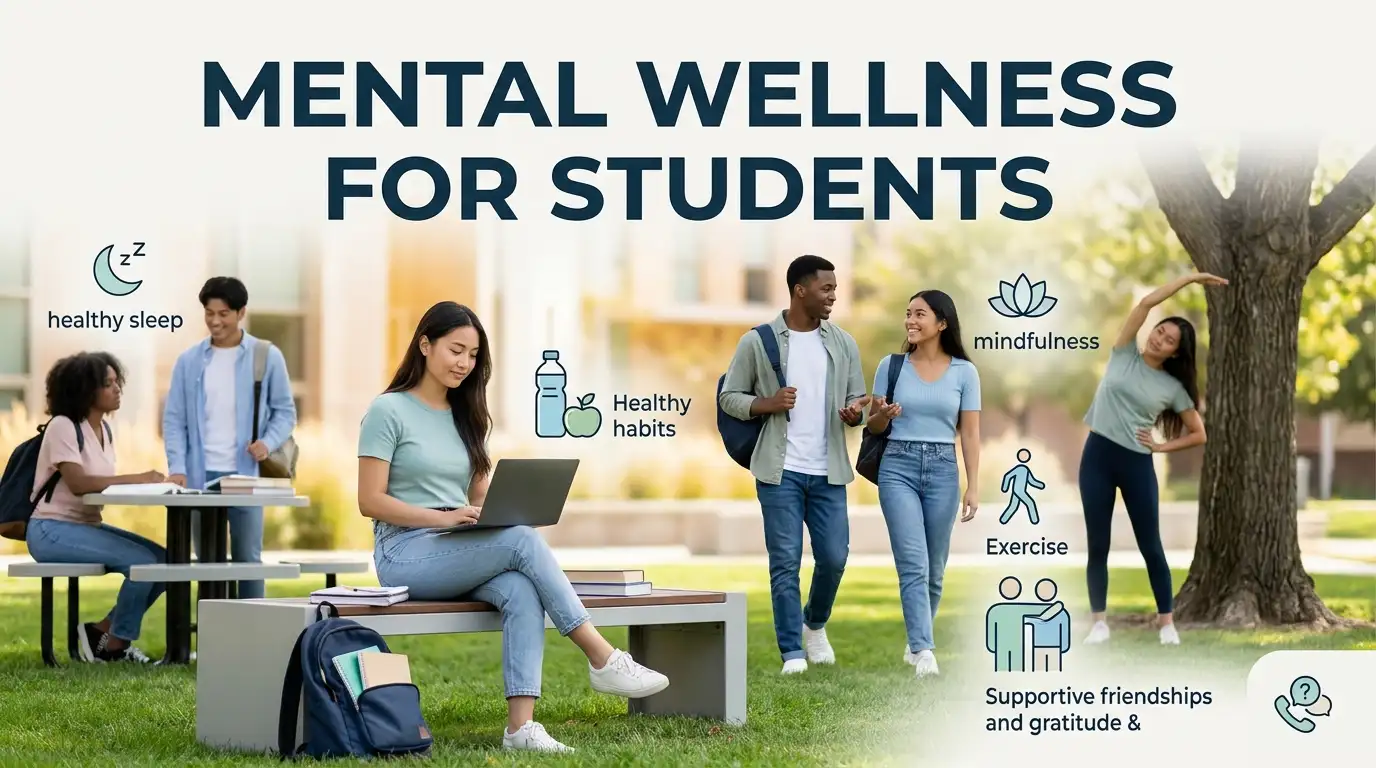
Between exams, assignments, social pressures, and planning for the future, student life can feel overwhelming. You’re not alone. Adolescence and the transition to adulthood are times of increased vulnerability to mental health issues, but they also offer a key opportunity to strengthen resilience and well-being.
The good news is that mental wellness is something you can build and protect. Research shows that students who prioritize their mental health are better equipped to handle academic pressures, build strong relationships, and enjoy their student experience.
This guide covers practical strategies for mental wellness for students, including:
- Building healthy daily habits
- Managing academic stress
- Connecting with others
- Seeking support when needed
Why Mental Wellness Matters for Students
Mental wellness is essential for your overall health and quality of life. It affects how you think, feel, and respond to everyday situations. For students, strong mental wellness is linked to better academic performance, healthier relationships, and greater resilience in the face of challenges.
A systematic review found that resilience is positively associated with mental health and mitigates the effects of academic and social stressors. Protective factors for students include emotion regulation, peer and family support, and structured routines.
Research also shows that mental wellness is a foundation for academic success, not just the absence of distress, but the presence of the skills and support systems needed to cope effectively with challenges.
Building Healthy Daily Habits
Sleep Well
Quality sleep is one of the most important things you can do for your mental health. The CDC recommends getting enough quality sleep to maintain health, improve learning performance, and enhance emotion regulation.
Tips for better sleep:
- Maintain a consistent sleep schedule even on weekends
- Keep your bedroom cool, dark, and quiet
- Avoid screens at least an hour before bed
- Try relaxation techniques like deep breathing or reading before sleep
Eat Well and Stay Hydrated
What you eat affects how you feel. A healthy diet and staying well hydrated throughout the day can help you function more effectively and build resilience.
Simple nutrition tips:
- Eat regular meals with a balance of protein, carbohydrates, and vegetables
- Drink water throughout the day
- Limit caffeine and sugary drinks, especially in the afternoon and evening
Move Your Body
Physical activity is a powerful stress reliever. Exercise releases endorphins that help you feel better and reduces the physical effects of stress.
Ways to stay active:
- Take a short walk between classes
- Join a sports team or fitness class
- Try yoga or stretching
- Dance, bike, or do any movement you enjoy
Managing Academic Stress
Practice Mindfulness and Relaxation Techniques
Mindfulness and relaxation can help reduce stress, improve focus, and regulate emotions. Research shows that mindfulness-based interventions, including adapted or modified protocols, can have a significant effect in reducing symptoms of anxiety and depression among students.
Simple mindfulness practices:
- Deep breathing: Inhale for 4 seconds, hold for 4 seconds, exhale for 6 seconds. Repeat 5-10 times.
- Progressive muscle relaxation: Tense and relax different muscle groups throughout your body to release tension.
- Body scan: Lie down and focus your attention on different parts of your body, starting from your toes and moving up.
- Mindful moments: Pay attention to the present moments, sights, sounds, and sensationseven for a few minutes.
Learn Effective Coping Strategies
Having a toolkit of coping strategies helps you navigate stress. Research shows that the daily use of adaptive coping strategies predicts greater daily well-being, and this relationship is partly explained by greater daily experiences of positive emotions .
Coping strategies to try:
- Break big tasks into smaller, manageable steps
- Take short breaks when you feel overwhelmed
- Use positive self-talkreplace “I can’t do this” with “This is hard, but I can try.”
- Practice self-compassion: treat yourself with kindness when things don’t go perfectly
Manage Screen Time and Digital Habits
Research shows that problematic social media use, characterized by difficulty controlling use and experiencing negative consequences, is associated with lower mental and social well-being among students. WHO data reveals that more than 1 in 10 adolescents show signs of problematic social media behavior.
Healthy digital habits:
- Set limits on screen time
- Take regular breaks from screens, especially before bed
- Curate your social media feeds to follow accounts that uplift you
- Be mindful of how social media makes you feel and reduce time on apps that leave you feeling drained
Connecting with Others
Build Supportive Friendships
Social connection is a huge part of resilience and mental health. People who report having close relationships have lower levels of cortisol than those who don’t feel as connected.
Ways to connect:
- Spend time with friends who make you feel good about yourself
- Join clubs, sports teams, or study groups
- Reach out to classmates; even small conversations can help build connections
- Stay in touch with family members who support you
Peer Support
Many schools have peer support programs where trained students look out for their peers and foster an inclusive class culture. Don’t be afraid to reach out to a friend when you’re struggling, and be there for them, too.
Talk to Someone You Trust
If you’re feeling overwhelmed, talking to someone can help. The Ministry of Education (MOE) notes that teachers provide a listening ear to students, and all schools have trained counselors to support students who require additional help.
Who to talk to:
- A trusted teacher or form teacher
- A school counsellor
- A family member
- A close friend
Practicing Gratitude and Positive Thinking
Gratitude is a proven tool for enhancing well-being. When you focus on what is going well, you remind yourself that not everything is “horrible” or overwhelming.
Simple gratitude practices:
- Write down three things you’re grateful for each day
- Share positives with others, especially if they were involved
- Notice and appreciate small moments of joy
Cultivate purpose and creativity: The APA recommends cultivating your purpose, inspiring your creativity, developing a new interest, and connecting spiritually as ways to enhance well-being. These practices can help you refocus your outlook and inspire a deeper sense of engagement with the world around you.
When to Seek Professional Help
Sometimes, despite our best efforts, we need extra support. Seeking help is a sign of strength, not weakness.
Signs you may need professional support:
- Your feelings affect your sleep, relationships, or daily life
- You feel unable to cope with academic or personal demands
- You have persistent low mood, anxiety, or difficulty concentrating
- You’re using alcohol, drugs, or unhealthy coping behaviors to manage stress
Where to find support:
- Talk to your school counsellor
- Speak with a trusted teacher or family member
- Reach out to mental health organizations
- Call or text a helpline for immediate support
Frequently Asked Questions
1. What is mental wellness for students?
Mental wellness is the ability to cope with stress, build resilience, and maintain emotional and psychological well-being while navigating academic, social, and personal demands.
2. Why is mental wellness important for students?
Mental wellness supports academic performance, healthy relationships, and resilience. Students with strong mental wellness are better equipped to handle challenges and enjoy their student experience.
3. How can students manage stress?
Students can manage stress through healthy sleep habits, regular exercise, mindfulness and relaxation techniques, effective coping strategies, and connecting with supportive people.
4. How does sleep affect student mental health?
Quality sleep improves learning performance, enhances emotion regulation, and helps maintain overall health. Lack of sufficient sleep increases the risk of anxiety, depression, and academic difficulties.
5. Does mindfulness help students with stress?
Yes. Research shows that mindfulness-based interventions can have a significant effect in reducing symptoms of anxiety and depression among students.
6. What role does social connection play in mental wellness?
Social connection is a huge part of resilience and mental health. Supportive friendships reduce stress, lower cortisol levels, and provide a sense of belonging and support.
7. When should a student seek professional help?
Seek help if feelings affect sleep, relationships, or daily life; if you feel unable to cope; or if you have persistent low mood, anxiety, or difficulty concentrating.
Key Takeaways
- Mental wellness is essential for academic success and quality of life
- Healthy habits (sleep, nutrition, exercise) build resilience and support well-being
- Mindfulness and coping strategies reduce stress and improve focus
- Social connection is a protective factor for mental health
- Positive thinking and gratitude enhance well-being
- Professional support is available and effective when self-care isn’t enough
Conclusion
Mental wellness is not a luxury; it’s a foundation for thriving as a student. If you’re managing exams, navigating social pressures, or planning for the future, building healthy habits and connecting with others can make a real difference.
Research shows that both personal and environmental factors shape student resilience and well-being. Interventions addressing both domains are most effective. Start with one strategy from this guide today. Just one. Get an extra hour of sleep. Take a short walk. Call a friend. Practice a moment of mindfulness.
Small actions, repeated consistently, create lasting change. You deserve to feel your best, and it starts with simple choices you can make today.
Medical Disclaimer
This article is for educational and informational purposes only and is not medical advice. Always consult with a qualified healthcare provider regarding any health concerns. If you are experiencing severe or persistent mental health issues, please seek professional support.

Hi, I’m Grace Mitchell, the content writer behind LaxiBoost.I believe that small daily habits can make a meaningful difference in how we think, feel, and live. Through LaxiBoost, I write about mental wellness, mindfulness, self-care, stress management, healthy habits, and personal growth in a way that’s simple, practical, and easy to understand. My goal is to turn reliable information into actionable guidance that anyone can apply in everyday life.
Every article I publish is carefully researched and written with readers in mind. If you’re looking to reduce stress, improve your mindset, or develop healthier routines, I hope LaxiBoost provides the support and inspiration you need on your wellness journey.
Thank you for visiting LaxiBoost and being part of this growing community.