Have you ever reached the end of the day, sank into the couch, and realized you didn’t take a single breath just for yourself? Between work deadlines, family needs, and household chores, it’s easy to run on empty. You might feel constantly tired, emotionally drained, or stretched too thin. When life gets busy, our own personal well-being is usually the first thing we drop.
Neglecting your daily needs isn’t a sign of weakness—it’s simply a sign that your stress levels have taken over. Over time, pushing past exhaustion can affect your sleep habits, mood, and long-term work-life balance. Struggling to keep up doesn’t mean you’re failing; it just means you need a sustainable way to recharge.
The good news? Research suggests that small, consistent actions often have a far greater impact on emotional well-being than drastic lifestyle changes. Self-care doesn’t require expensive spa trips or hours of free time. By using a printable self care checklist, you can break down healthy living into quick, manageable steps that fit naturally into your busy schedule.
In this guide, you will discover:
- How to identify what kind of self-care your body and mind actually need
- Simple daily habits that take under ten minutes to complete
- Practical ways to build a healthy routine without feeling overwhelmed
- A clear, step-by-step framework to create a lasting healthy mindset
Let’s explore how a few small tweaks can bring calm back into your everyday life.
What Is a Printable Self Care Checklist?
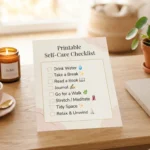
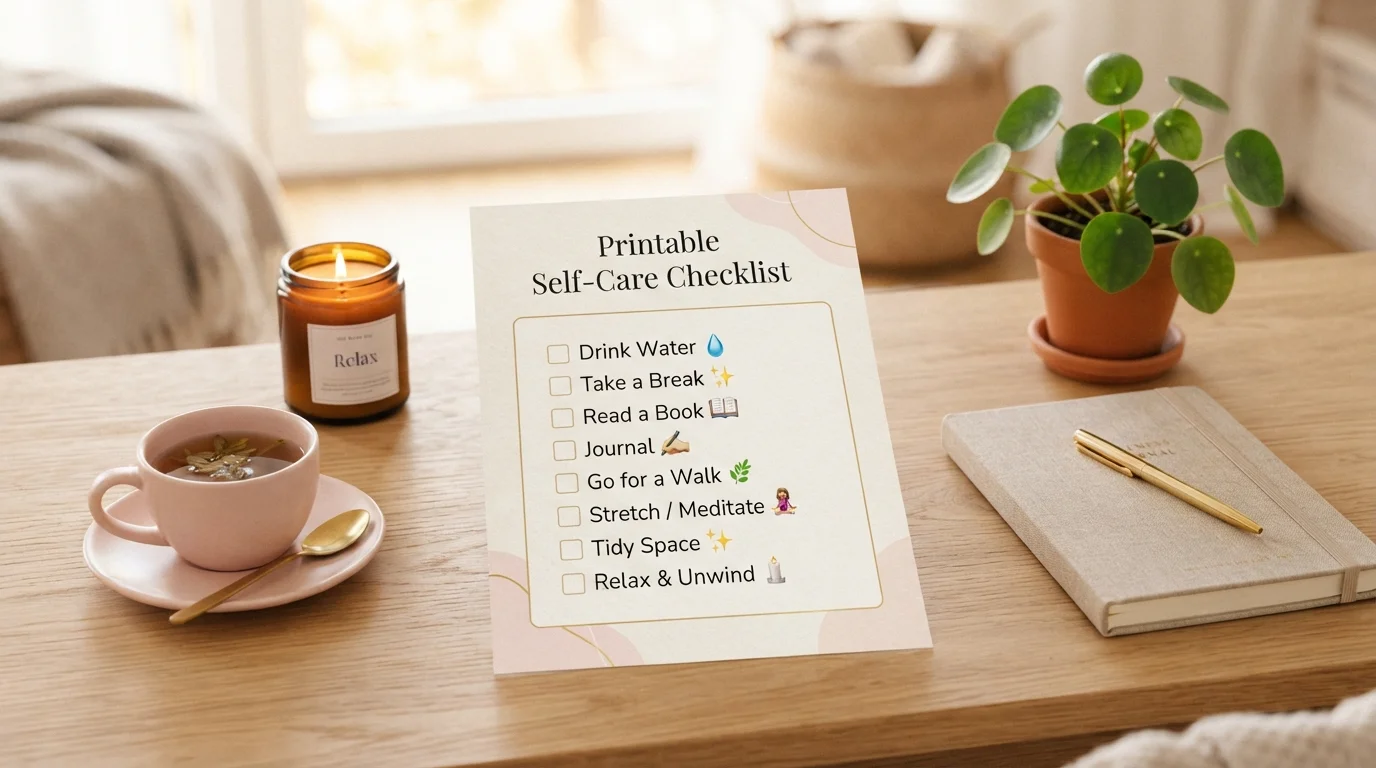
A printable self care checklist is a simple visual tool designed to help you track basic daily habits that support your physical and emotional well-being. Rather than acting as a rigid set of rules, it serves as a gentle reminder to check in with yourself throughout the day. It translates abstract goals—like “reducing stress”—into concrete actions, such as drinking water, taking a brief walk, or practicing relaxation techniques.
Why It Matters Today
Modern life moves fast, and constant digital connectivity keeps our nervous systems on high alert. Research indicates that prolonged stress without proper recovery can drain motivation and disrupt sleep habits. Having a physical, printed routine removes decision fatigue. You no longer have to ask, “What should I do to relax?” Instead, you have a clear roadmap on paper that grounds your daily routine.
Key Health & Lifestyle Benefits
Using a dedicated daily visual tool offers practical advantages for your overall wellness journey:
- Lowers Cognitive Load: Offloads your reminders from your memory to paper, helping ease mental clutter.
- Encourages Consistency: Ticking a box provides a quick sense of accomplishment, reinforcing positive self-improvement.
- Improves Stress Management: Prompts you to take regular breaks, which may support lower cortisol levels over time.
- Builds Self-Awareness: Helps you spot patterns in your healthy lifestyle, showing which habits leave you feeling most restored.
Common Approaches to Self-Care
Self-care isn’t one-size-fits-all. A balanced approach addresses multiple areas of your life.
Physical Self-Care
- Drinking 8 glasses of water daily
- Going to sleep at the same time each night
- Stretching for 5 minutes in the morning
- Eating balanced meals that nourish your body
Emotional and Mental Wellness
- Practicing 3 minutes of deep breathing or mindfulness
- Writing down three things you are grateful for
- Unplugging from social media an hour before bed
- Setting clear boundaries around work hours
Environmental and Social Care
- Clearing off your primary workspace
- Spending 10 minutes outdoors in natural light
- Sending a quick, positive text to a close friend
- Creating a quiet space for evening relaxation
Step-by-Step Action Plan
- Download or Print Your Checklist: Place the sheet somewhere visible, like your desk or refrigerator door.
- Select 3 Core Priorities: Do not attempt every item at once; pick three simple tasks for your first week.
- Anchor to Existing Habits: Pair a new item with an established routine (e.g., practice deep breathing while your coffee brews).
- Track Progress Generously: Mark off items as you complete them, focusing on effort rather than perfection.
- Adjust Weekly: Evaluate what felt natural and what felt burdensome, adjusting your list for the following week.
Best Practices & Daily Habits
To make your routine sustainable long-term, keep these guidelines in mind:
- Keep It Minimal: Limit your active list to 5 items a day to avoid feeling overwhelmed.
- Prioritize Sleep: Evidence indicates that quality rest is the foundation for a healthy mindset and emotional resilience.
- Set Soft Reminders: Use low-key alarms on your phone to remind you to hydrate or step away from your computer.
- Practice Micro-Rest: Integrate 60-second relaxation techniques during transitions between tasks.
Common Mistakes to Avoid
- Overcomplicating the List: Adding 20 complex tasks turns a helpful tool into a stressful chore list.
- All-or-Nothing Thinking: Skipping a day is normal; avoid abandoning the habit entirely after one missed box.
- Copying Someone Else’s Routine: Focus strictly on what restores your energy, not what works for others.
- Treating Self-Care as an Earned Reward: Personal well-being is a basic necessity, not a luxury reserved only for light workdays.
Myths vs. Facts
| Myth | Fact |
| Self-care takes too much time. | Effective self-care can take as little as 2 to 5 minutes per day. |
| It is a selfish practice. | Taking care of yourself helps ensure you have the energy to support others. |
| Self-care requires spending money. | The most effective practices—like sleep, walks, and breathing exercises—are entirely free. |
Expert Perspective & Real-World Application
Consider a busy professional named Sarah. She frequently worked through lunch and ended her days feeling completely exhausted. Instead of committing to an hour-long evening routine, she posted a simple checklist by her monitor. Her daily goals were minimal: drink one extra glass of water, take a 5-minute outdoor walking break at noon, and close her laptop by 6:00 PM.
Within two weeks, these tiny friction-free checks allowed her to maintain better energy levels and maintain a far healthier work-life balance—proving that consistency always beats intensity.
Frequently Asked Questions
How do I stick to a printable self care checklist?
Place your checklist in a highly visible area and start with just two or three simple daily tasks. Linking these tasks to habits you already do, like brushing your teeth, makes them much easier to remember.
How often should I update my self-care list?
It is best to review and adjust your list weekly or monthly as your schedule and needs change. Updating it regularly ensures your routine remains relevant and stress-free.
Can self-care really help reduce stress?
Yes, engaging in small, intentional self-care activities helps activate your body’s relaxation response. Over time, these daily actions can lower overall stress levels and support mental clarity.
What should be included in a beginner self care checklist?
A beginner list should focus on basic physical and emotional needs, such as hydration, adequate sleep, brief movement, and a few minutes of quiet downtime. Keep the tasks quick and simple to build early momentum.
What is the best time of day to practice self-care?
The best time is whenever you can consistently fit it into your existing daily routine without feeling rushed. Many people find that short morning or evening rituals work best for long-term consistency.
Summary & Medical Disclaimer
Key Takeaways
- Start small by focusing on 3 realistic habits per day.
- Keep your printable checklist visible to remove decision fatigue.
- Remember that micro-steps add up to significant long-term health improvements.
- Adapt your list regularly to fit your changing schedule and energy levels.
Choosing to prioritize your well-being doesn’t require a total life overhaul. By using a printable self care checklist to guide your day, you can build a sustainable, healthy lifestyle one simple task at a time. Pick your first small action today and give yourself permission to pause.

Hi, I’m Noah Richardson, the content writer behind LaxiBoost. I write about self-care and personal well-being to help people build healthier and more balanced lives. My goal is to turn trusted information, easy-to-follow advice that anyone can apply in daily life.
I believe self-care is more than an occasional activity it’s a lifelong habit that supports both mental and physical well-being. Through my articles, I share simple strategies, practical tips, and research-based insights to help you reduce stress, improve your daily routine, and take better care of yourself with confidence.
Thank you for reading LaxiBoost. I hope my content helps you create healthier habits and enjoy a happier, more balanced lifestyle.