
Do you ever feel like you’re just going through the motions? Maybe you’re stressed, tired, or struggling to find joy in things you used to love. You’re definitely not alone. Mental health conditions are among the most common health issues in the U.S. more prevalent than diabetes or heart disease.
The good news? There are proven, practical ways to improve your mental wellness. Research shows that simple cognitive and behavioral strategies can reliably boost happiness and reduce stress and they’re generally free and accessible to all.
This guide brings together the latest evidence on what actually works. You’ll discover:
- Science-backed strategies for improving mental wellness
- Practical tips you can start using today
- When to seek professional help
Let’s explore how you can feel better starting now.
What Is Mental Wellness?
Mental wellness is your ability to notice what you’re feeling, manage your stress, and stay connected to yourself and the people around you. It affects how you think, feel, and respond to everyday situations.

The National Institute of Mental Health notes that mental health includes emotional, psychological, and social well-being. It’s more than the absence of a mental illness—it’s essential to your overall health and quality of life.
Mental wellness isn’t about avoiding all difficult feelings. It’s about building the skills to meet life’s challenges with support and resilience.
Move Your Body for Your Mind
Physical movement benefits overall happiness and well-being. If you dance, do yoga, hike, or walk, moving your body supports mood and regulates the nervous system.
What the research shows:
- A review of more than 1.2 million adults found that doing any kind of exercise was “significantly and meaningfully associated” with better self-reported mental health.
- The sweet spot was 45 minutes of movement three to five times a week, but even short bursts of physical activity can boost brain health.
- Walking for just 10 to 15 minutes daily may lower your risk of depression by 18% .

Tips to get started:
- Start small even a 10-minute walk counts
- Choose activities you actually enjoy
- Think of movement as supporting your mind, not just your body
- A brisk walk can clear your head, release tension, and boost endorphins
Prioritize Sleep
“Sleep plays a major role in managing stress,” says psychologist Valentina Ogaryan, PhD . Research shows that lack of sufficient sleep increases the risk of various diseases, including depression.

Good sleep hygiene includes:
- Maintaining a consistent bedtime
- Keeping the bedroom cool, dark, and quiet
- Avoiding social media, news, and stimulating shows before bed
Why it matters: Adults need 7 or more hours of sleep each night. Sleep helps your brain process emotions, consolidate memories, and recover from daily stress.
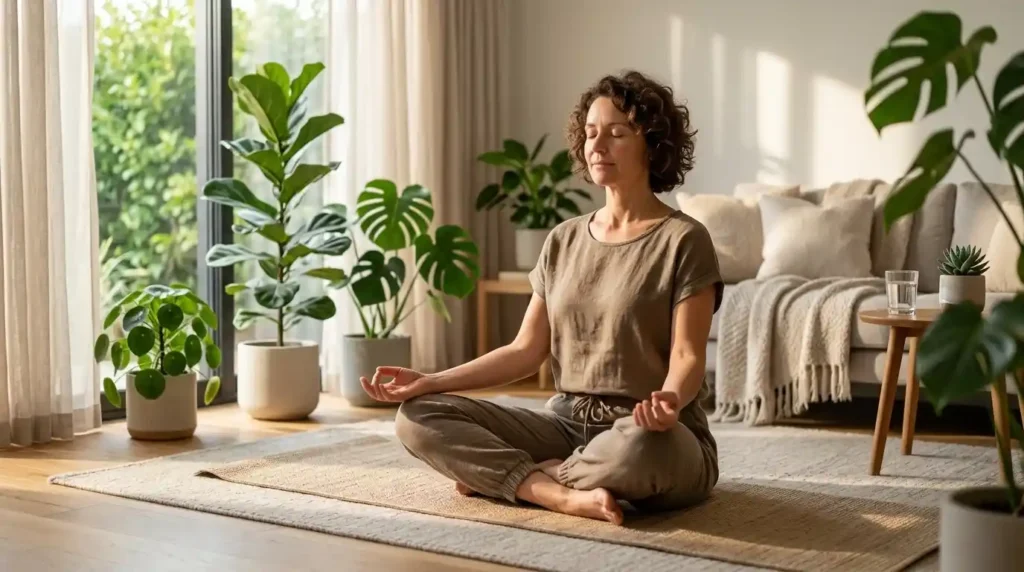
Practice Mindfulness and Present-Moment Awareness
Mindfulness is about being completely aware of what’s happening in the present—of all that’s going on inside and all that’s happening around you. It means not living your life on “autopilot.”
What the research shows:
- A recent meta-analysis of 132 studies found that mindfulness-based programs significantly improve mental health outcomes, including anxiety, depression, and stress in young adults.
- Mindfulness-based interventions for distress showed “highly suggestive evidence” of benefit, along with cognitive-based interventions for anxiety and depression.
- A 2024 study found that a mindfulness and self-care intervention significantly lowered perceived stress and increased self-compassion.
Simple mindfulness practices:
- Present-moment awareness: When everything feels overwhelming, focus on the here and now. Ask yourself: “What’s my next right action?”
- Breathing exercises: Breathe in through your nose to a count of 4, hold for 1 second, and exhale through the mouth to a count of 5. Repeat often.
- Mindful moments: Notice the sounds, sights, and smells while brewing your morning coffee. Count how many colors you see at the supermarket. Switch off devices and walk unplugged, listening to the sounds around you.
Connect with Others
Humans are social animals built for connection. Stress can be isolating and cause us to withdraw, but connecting with others is a salve for the psyche.

Why connection matters:
- Even tiny interactions with casual acquaintances and strangers decrease loneliness and improve happiness and well-being.
- Social support helps protect against the harmful effects of stress.
- A study found that even tiny interactions with casual acquaintances can improve well-being.
Ways to connect:
- Laugh with colleagues
- Hug your pet
- Have a conversation with a friend
- Smile at the barista making your coffee
- Reach out to friends and family who can provide emotional support and practical help
Be Kind to Yourself
Most of us have a harsh inner critic who works overtime. But that critical voice only increases our stress, triggering the same fight-or-flight response as caustic words from another person.

What the research shows:
- Self-compassion is a source of eudaimonic happiness the kind associated with purpose and meaning in life.
- People who are self-compassionate are more likely to try harder in the face of failure and ultimately reach their goals.
- Self-care practices significantly increase self-compassion.
How to practice self-compassion:
- Replace your inner critic with a kinder, more compassionate voice.
- Treat yourself like you would a friend with kindness and encouragement.
- Thank your inner critic for its good intentions, but resolve to talk to yourself kindly .
- Practice gratitude daily remind yourself of things you’re grateful for, be specific, and write them down.
Reduce Digital Overload
We live in a consumer culture, inundated by endless streams of content and advertising everywhere we go, which makes it easy to get overstimulated.

What the experts say: “Something really helpful for stress reduction is to simply consume less,” says Dr. Ogaryan less news, less social media, less information, less noise, and less screen time. “It’s about reducing the input.”
How to reduce consumption:
- Consider setting a maximum number of news articles per day
- Set a time limit on scrolling
- Go device-free for an afternoon or a whole day
- Take a digital detox to give your mind the peace and clarity it needs
Make Time for Play
Play isn’t just for kids, and it’s far from frivolous. The National Institute for Play says engaging in silliness, fun, and just-for-pleasure activities reduces stress and increases optimism and resilience.
What the research shows: A recent review found that play improves mental health.
How to incorporate play:
- Dance with your dog
- Build something with Legos
- Tell a joke
- Sing karaoke
- Do anything else that feels like fun
- Don’t worry about being productive just enjoy yourself
- Opt for more analog play, as a respite from our ever-more-digital world
Find Your Daily Anchor
What is a daily anchor? A short, intentional practice that grounds you and calms your nervous system. It could be a 10-minute walk during your lunch break or mindfully enjoying your coffee in the morning.
How to use an anchor:
- Be intentional about using that time to ground yourself
- You might even say to yourself, “I choose this walk to help me become centered.”
- Let your anchor adapt to your needs each day
Having an anchor won’t erase the busyness from your day, but it will allow you to approach it more calmly.
The Six Pillars of Lifestyle Psychiatry
Lifestyle psychiatry is a rapidly growing field that applies six core lifestyle interventions to promote mental wellness and treat mental disorders. These six pillars are:

- Physical activity and exercise: Movement supports mood and regulates the nervous system
- Nutrition and diet: A balanced diet and plenty of water improve energy and focus
- Sleep: Sleep plays a major role in managing stress
- Stress management: Mindfulness and relaxation techniques reduce stress
- Substance use reduction: Limiting alcohol and caffeine supports mental health
- Social connection and relationships: Connection with others protects against stres
Why it matters: The six pillars should be viewed as components of an overall lifestyle psychiatry intervention, not standalone strategies. Encouraging patients to make lifestyle changes can empower them to take an active role in their mental health.
When to Seek Professional Help
Self-care is important, but it’s not a substitute for professional mental health care. “If you’ve done everything you can and you’re still really struggling, it’s really important to seek help,” says Dr. Ogaryan

Signs you may need professional support:
- Difficulty sleeping
- Changes in appetite or unplanned weight changes
- Difficulty getting out of bed because of mood
- Difficulty concentrating
- Loss of interest in things you usually find enjoyable
- Inability to complete usual tasks and activities
- Feelings of irritability, frustration, or restlessness
Where to find support:
- Call or text 988 for the Suicide & Crisis Lifeline
- Talk to your doctor or a therapist
- Reach out to mental health organizations
- Seek support from your physician or a therapist
Frequently Asked Questions
1. How can I improve my mental wellness?
Improve your mental wellness by moving your body regularly, prioritizing sleep, practicing mindfulness, connecting with others, being kind to yourself, and reducing digital overload.
2. Does exercise really help mental health?
Yes. A review of more than 1.2 million adults found that exercise was “significantly and meaningfully associated” with better mental health. Even 10 to 15 minutes of walking daily may lower depression risk.
3. How does sleep affect mental health?
Sleep plays a major role in managing stress. Lack of sufficient sleep increases the risk of various diseases, including depression.
4. What are mindfulness-based interventions?
Mindfulness-based interventions include practices like meditation, yoga, and mindful breathing. Research shows they significantly improve anxiety, depression, and stress.
5. Is self-compassion really helpful?
Yes. Research shows that self-compassion is a source of happiness and meaning. People who are self-compassionate are more likely to try harder after failure and reach their goals.
6. What are the six pillars of lifestyle psychiatry?
The six pillars are physical activity, nutrition, sleep, stress management, substance use reduction, and social connection. Together, they form an evidence-based approach to mental wellness.
7. When should I seek professional help?
Seek help if you experience severe symptoms that have lasted two weeks or more, including difficulty sleeping, changes in appetite, difficulty concentrating, or loss of interest in activities.
8. What does the WHO say about mental health self-help?
The WHO has launched a guide to help countries scale up psychological self-help interventions, including Step-by-Step and Doing What Matters in Times of Stress. Evidence shows self-help approaches are effective, particularly for depression and anxiety.
Key Takeaways
- Mental wellness is about meeting life’s challenges with support and resilience
- Exercise—even 10 minutes of walking—boosts mental health
- Sleep plays a major role in managing stress
- Mindfulness-based interventions significantly improve anxiety and depression
- Social connection protects against stress and improves well-being
- Self-compassion is linked to greater happiness and goal achievement
- Reducing digital overload helps lower stress
- The six pillars of lifestyle psychiatry offer an evidence-based approach to mental wellness
- Seek professional help when self-care isn’t enough

Conclusion
Improving your mental wellness doesn’t require a complete life overhaul. Small, consistent actions can make a meaningful difference. Research shows that simple cognitive and behavioral strategies can reliably boost happiness and reduce stress—and they’re generally free and accessible to all.
If it’s taking a short walk, practicing mindfulness, connecting with a friend, or being kinder to yourself, each small step adds up. Studies show that mindfulness and cognitive-based interventions have the most robust evidence of benefit. Exercise produces a similar well-being boost to many psychological interventions.
Start with one strategy from this guide today. Just one. Take a 10-minute walk. Go to bed at the same time tonight. Write down something you’re grateful for. Call someone you love.
Small actions, repeated consistently, create meaningful change. You deserve to feel your best. And it starts with simple choices you can make today.
Ready to Improve Your Mental Wellness?
Choose one strategy from this guide and commit to it for the next seven days. Write it down, set a reminder, and notice how you feel. Your future self will thank you.
Medical Disclaimer
This article is for educational and informational purposes only and is not medical advice. Always consult with a qualified healthcare provider regarding any health concerns. If you are experiencing severe or persistent mental health issues, please seek professional support.

I’m Qaisar Iqbal, a professional content writer with a passion for creating clear, engaging, and informative content. I specialize in writing well-researched articles that simplify complex topics and provide readers with accurate, practical, and easy-to-understand information.
Thank you for reading my work. I’m committed to creating content that is trustworthy, helpful, and enjoyable to read.