Do you ever feel like you’re running on empty? Maybe you’re juggling work, family, and endless responsibilities, leaving little time or energy for yourself. You’re not alone. Many people struggle to prioritize their own needs, often believing that self-care is selfish or indulgent.
But here’s the truth: self-care isn’t about bubble baths and face masks, although those can be nice too. The World Health Organization (WHO) defines self-care as “the ability of individuals, families and communities to promote and maintain their own health, prevent disease, and cope with illness”. It’s about taking intentional steps to protect and improve your physical, mental, and emotional well-being.
Self-care is the cornerstone of a healthy, happy life. Without it, you may find yourself feeling exhausted, burnt out, and emotionally drained. In contrast, a consistent self-care routine can ensure you have enough energy to take on life’s stressors with resilience and a positive attitude.
This complete guide will walk you through everything you need to know about self-care:
- What self-care really means (and what it doesn’t)
- The science-backed benefits of prioritizing yourself
- Practical strategies for every area of your life
- How to build a sustainable self-care routine
What Is Self-Care?
Self-care is the practice of taking intentional actions to maintain and improve your health and well-being. The WHO defines self-care as “the ability of individuals, families and communities to promote health, prevent disease, maintain health, and cope with illness and disability with or without the support of a healthcare provider.”

Despite what social media might suggest, self-care isn’t just about pampering or treating yourself . It’s any activity that you do deliberately to take care of yourself. Self-care is personal and looks different for everyone. What feels restorative to one person might not resonate with someone else, and that’s perfectly normal.
Self-care is also not selfish. It is a misunderstanding to see taking care of yourself as selfish. The more energy you have, and the better your health, the more you can properly help others. Burning out through an inability to make time for yourself, or being exhausted and tense all the time, actually helps no one.
Why Self-Care Matters
By prioritizing self-care, you may notice several important benefits:
Increased energy. A consistent self-care routine can ensure you have enough energy to take on life’s stressors with resilience.
Improved mood. Self-care can reduce symptoms of anxiety, depression, and stress. Studies have found that self-care can help reduce job burnout and improve job satisfaction.
Long-lasting health. Self-care supports physical health through healthy lifestyle choices: eating well, being active, and getting enough sleep that help prevent chronic diseases.
Happier relationships. When you take care of yourself, you’re better able to care for others. Self-care makes it easier for you to focus on what’s important to you.
Resilience. Self-care builds resilience and helps people cope with life’s challenges.
Self-compassion. Participants in self-care interventions have demonstrated significantly increased self-compassion, learning to treat themselves with the same kindness they’d offer a friend.
The Seven Pillars of Self-Care
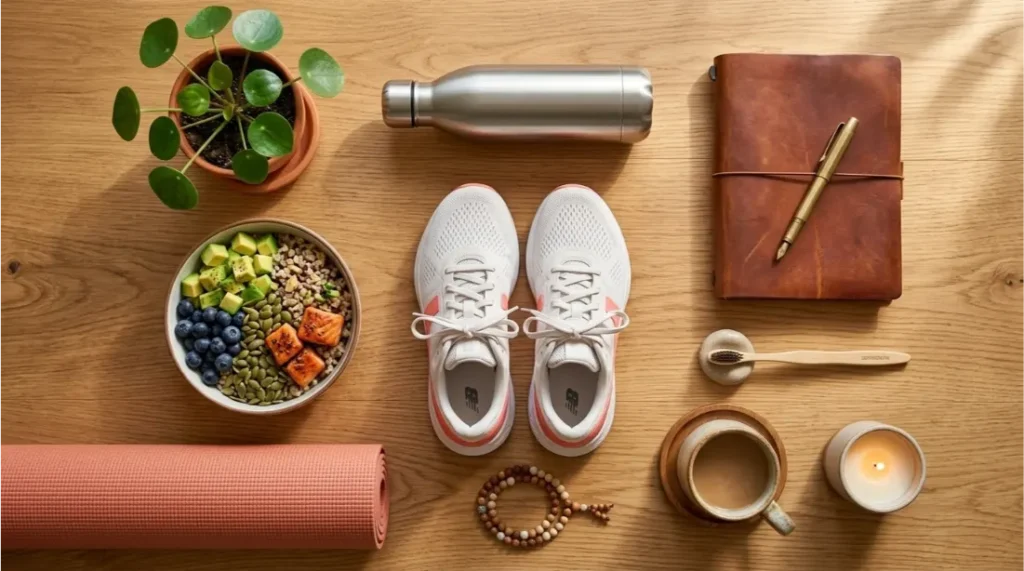
The International Self-Care Foundation (ISF) has developed a Seven Pillars of Self-Care framework to outline the important areas involved in the practice of self-care. These pillars help ensure your self-care practices cover all aspects of your health and well-being.
Pillar 1: Knowledge and Health Literacy
Health literacy includes using the skills necessary to gain access to, understand, and use information in order to maintain good health. The more you know, the better choices you’ll make.
Examples include:
- Knowing where to look for health information and how to use it
- Knowledge of risk factors associated with various diseases
- Understanding how to properly use medicines or vaccines
- Knowing how to use self-care products properly
- Knowing when to seek professional medical help or advice
Pillar 2: Mental Well-Being, Self-Awareness, and Agency
Mental well-being encompasses life satisfaction, optimism, self-esteem, feeling in control, having purpose in life, and a sense of belonging or support.
Activities to improve mental well-being include:
- Spending quality time with friends and family
- Finding time to participate in your favorite activities: painting, sewing, dancing, etc.
- Learning or trying something new to stimulate your mind
- Practicing mindfulness activities guided imagery, meditation, yoga, mindful walking, etc.
Pillar 3: Physical Activity
Physical activity is essential for good health and is an important part of self-care. Research shows that even walking for just thirty minutes a day can improve your mental and physical health.
Benefits of physical activity include:
- Helping to control your weight
- Reducing your risk for cardiovascular diseases, diabetes, colon and breast cancer, and dementia
- Reducing stress and improving your mental health
- Improving your sleep patterns
- Improving overall bone health
Pillar 4: Healthy Eating
Eating healthily is an essential aspect of self-care and helps to maintain your overall health. Those with an unhealthy diet have more of a risk of developing chronic diseases and having poor health.
General healthy eating guidelines:
- Increasing your consumption of fruits and vegetables, legumes, whole grains and nuts
- Shifting your fat consumption away from saturated fats to unsaturated fats and limiting/eliminating trans-fatty acids
- Limiting your intake of simple sugars
- Limiting salt (sodium) consumption
Pillar 5: Risk Avoidance and Mitigation
Risk avoidance includes avoiding behaviors that may increase the risk of disease or death. Getting regular checkups as recommended by your doctor can help prevent illness .
This includes:
- Making sure you are vaccinated
- Not smoking or quitting smoking
- Practicing safe sex
- Limiting/eliminating drinking
- Protecting yourself from the sun
- Wearing a seat belt
- Wearing a helmet for sports or when riding a bike
Pillar 6: Good Hygiene
Practicing good hygiene is an important element of self-care. Good hygiene includes standard practices that you do to preserve your health and well-being.
Good hygiene practices:
- Washing your body often
- Brushing your teeth
- Washing your hair with soap or shampoo
- Washing your hands with soap after going to the toilet
- Washing hands with soap before preparing, serving, or eating food
- Wearing clean clothes
Pillar 7: Rational and Responsible Use of Self-Care Products and Services
This pillar involves the rational and responsible use of self-care products and services. Taking medicine and supplements when necessary, and avoiding them entirely when they’re not, is part of self-care.
This means:
- Reading the directions on the label and leaflet, and other information you get with your medicine or products
- Following the instructions provided with your medications and products
- Having a pharmacist or doctor explain things you do not understand
- Calling your doctor right away if you have a serious side effect or if a side effect doesn’t improve
- Completing your treatment and consulting a healthcare provider if symptoms continue
By knowing and practicing self-care through the seven pillars outlined above, you will be in better control of your health and able to manage your health conditions to the best of your ability.
Physical Self-Care
Physical self-care involves activities that support your body’s health and function. Health is the foundation of a happy life, and by engaging in physical self-care practices, you can set yourself up for better physical health.

Move your body. The American Heart Association recommends at least 150 minutes of moderate-intensity aerobic exercise each week. Finding an activity you enjoy walking, dancing, riding a bike will help the time pass easily. Start slowly and try to build some physical activity into your daily self-care plan.
Prioritize sleep. The Sleep Foundation suggests that adults aim for 7-8 hours per night. Sleep plays a notable role in our immune system, hormone production, stress reduction, and weight management. Create a calming bedtime routine: limit screens, dim the lights, and practice deep breathing.
Eat nourishing food. A well-balanced diet rich in vegetables, fruits, whole grains, and lean proteins provides the vitamins and minerals your body needs to function properly. Consider meeting with your doctor or a nutritionist to discuss your dietary needs and develop a healthy eating plan.
Stay hydrated. Drinking enough water is essential for digestion, skin health, and overall well-being.
Get outside. Being in nature, even if it’s just your backyard, can help relax your mind and slow down negative or anxious thoughts.
Schedule regular check-ups. Prevention is powerful. Getting regular checkups as recommended by your doctor can help prevent illness and keep you informed about your risk factors.
Practice good hygiene. Showering, washing your hair, and brushing your teeth can keep you clean, but you can also make this aspect of self-care more luxurious by adding in the occasional bubble bath, face mask, mani-pedi, or salt scrub.
Mental Self-Care
Mental self-care involves activities that support your cognitive and emotional well-being and keep your mind sharp, clear, and positive throughout the day.

Practice mindfulness. Mindfulness is an effective form of self-care that can reduce stress and improve your emotional well-being. Mindfulness and meditation practices can help shift individuals from a state of anxiety to a more peaceful state of being.
Journal your thoughts. Writing down what’s on your mind can clear mental clutter and help you process emotions. Journaling about your feelings lets you express, understand, and cope with them better. You can also use journaling to identify certain mentalities and practices that you need to improve on.
Limit digital distractions. Turn off notifications on distracting apps and put your phone on airplane mode when you need to focus. Consider taking a social media detox to give your mind the peace, quiet, and clarity it needs to function at its best.
Engage in creative activities. Creative activities like painting, crafting, or even cooking can act as a therapeutic outlet for stress and creativity. Carve out time in your day to learn about subjects that interest you, if you prefer reading, listening to podcasts, or watching documentaries.
Set boundaries. Self-care also means knowing when to say no. Setting boundaries with others can help you manage your energy and prioritize your needs.
Cultivate supportive relationships. Feeling connected to others has been found to be a cornerstone to good mental health. Choose your relationships carefully, and make time for the people you can most be yourself around.
Emotional Self-Care
Emotional health is just as important to your well-being as your physical health. Emotional self-care is about acknowledging and processing feelings instead of ignoring them.
Check in with your emotions. Make time to listen to how you are feeling, and to process and respect your emotions. It is as equally about finding time for a good cry as it is finding time for laughter.
Practice self-compassion. Self-compassion is the art of accepting and liking yourself no matter what you do, say, or think. Try to extend the same patience and courtesy you do to your friends to yourself.
Set emotional boundaries. Healthy emotional habits help you respond to life more calmly rather than react impulsively. This includes setting boundaries with others and practicing self-compassion instead of harsh self-criticism.
Talk about your feelings. It’s important to be able to communicate your feelings and needs to others effectively to maintain good relationships. Communicating your feelings can also offer comfort and support to others.
Practice gratitude. Gratitude journals writing down things you are grateful for daily can enhance positivity and overall well-being.
Seek professional support when needed. Therapy can be a powerful form of self-care, providing a safe place to explore emotions and learn effective coping techniques.
Social Self-Care
Humans are wired for connection, which makes social self-care a key piece of overall well-being. Strong social connections are a key factor in living a fulfilling and happy life.

Connect with friends and family. Spending quality time with family, going on a date with your significant other, or catching up with friends are all forms of social self-care. Regular interactions with friends, family, and community groups can provide emotional and psychological support.
Volunteer. Giving back to others can improve your mental and physical health. Volunteering in your community is a meaningful way to connect with others.
Join groups or clubs. Joining a local book club, team sport, or hobby group can help you meet like-minded people and build a sense of community.
Honor your boundaries. While positive relationships offer many benefits, toxic relationships often have the opposite effect. Social self-care involves both adding meaningful opportunities for connection and limiting time with anyone who mistreats you or drains your emotional energy or breaking ties with them altogether.
Ask for help. Sharing workloads with others can free up time for self-care. Sometimes the best self-care of all is letting other people do the caring.
Spiritual Self-Care
Spiritual self-care is about connecting with what brings you purpose and meaning. Nurturing the spirit has been shown to improve health by enhancing your sense of subjective well-being.
Connect with nature. Spending time in nature can be a form of spiritual connection, if you’re walking in a park or simply sitting in your backyard.
Meditate or pray. If you choose to connect with God, the universe, source energy, or Mother Nature, a spiritual practice can help you look at life with more awe, appreciation, gratitude, love, and grace.
Reflect on your values. Take time to reflect on the purpose of your life and what matters most to you.
Practice gratitude. Expressing gratitude or writing a list of what you’re thankful for is a form of spiritual self-care.
Help others in need. Engaging in activities that make the world a better place can nourish your spirit.
Professional Self-Care
Professional self-care involves activities that support your well-being at work and align your work life with your capacity, passions, and boundaries.

Set healthy boundaries at work. This might mean not checking emails after a certain time or restructuring your workflow to reduce stress. A small boundary can feel like drawing the curtains on the day.
Advocate for rest and balance. Make sure your work life reflects your capacity and need for rest.
Take breaks. Step away from your desk regularly. Even a five-minute walk or stretch can reduce stress and improve focus.
Ask for what you need. Have a conversation with your manager about your workload or work environment if something isn’t working.
Say no to roles that cost you your health. You can care about your work and still protect your energy.
Environmental Self-Care
Your environment has a powerful impact on how you feel. Environmental self-care involves creating a calming, supportive environment.
Create a calming space. Take a few minutes each day to tidy up your space, light a favorite candle, or open the windows for fresh air.
Declutter. Clutter can contribute to stress. Choose one small area and tidy it up. The sense of order can help you feel more in control.
Make your home a sanctuary. Surround yourself with things that bring you comfort and joy plants, photos, soft lighting.
Keep your space clean. A clean home can reduce stress and create a more peaceful atmosphere.
How to Build a Sustainable Self-Care Routine
Building a self-care routine that really works takes intention and consistency. Here’s how to get started.
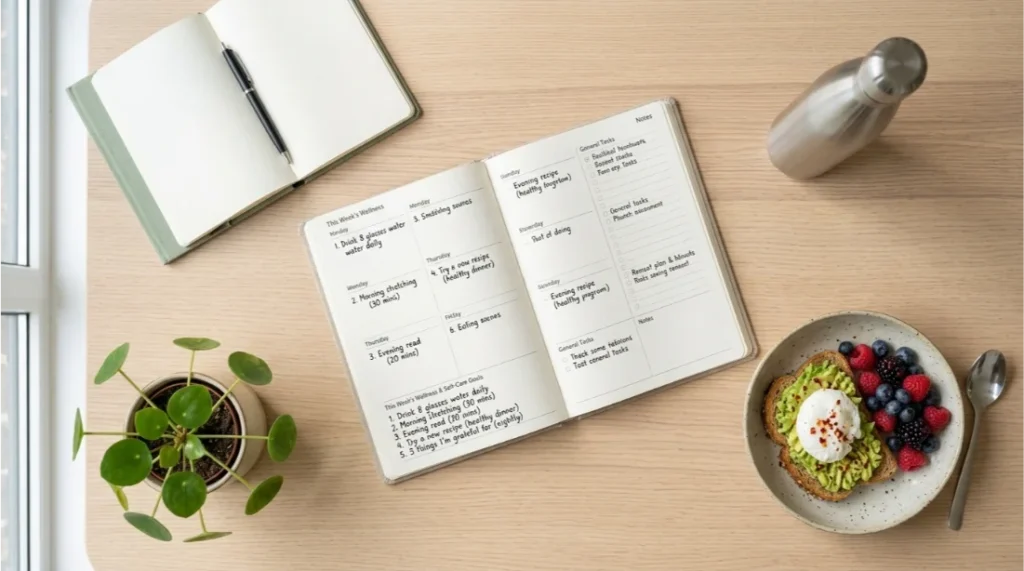
Start small. Choose just one or two practices to begin with. You don’t need to overhaul your life overnight. Start with manageable goals, such as drinking more water or walking for 10 minutes.
Make it enjoyable. Choose activities you actually like. Self-care should feel nourishing, not like a chore.
Be consistent. A few minutes each day is more effective than an hour once a month. Consistency matters more than intensity.
Think in categories. Organize your self-care into different “buckets” physical, mental, social, spiritual, professional, and environmental to make it feel more manageable.
Schedule it. Put self-care in your calendar like any other important appointment. Treat it as non-negotiable.
Listen to your body. Pay attention to what you need. If you’re tired, rest. If you’re stressed, take a break.
Be kind to yourself. If you miss a day, don’t give up just start again tomorrow. Self-care is about progress, not perfection.
Stay flexible. Balance in self-care isn’t about maintaining a static routine; it’s about flexibility and adaptability. Just like walking on a balance beam, continuous movement and adaptation are key to staying balanced.
Try micro self-care. When life feels overwhelming, micro self-care can help. These are small, bite-sized habits you can seamlessly fit into your routine like a one-minute breathing break, stretching at your desk, or writing down one positive thing.
Share your goals. Share your self-care goals and priorities with a loved one who can support those efforts and help hold you accountable.
Common Self-Care Mistakes to Avoid
Mistake 1: Making it too complicated. Self-care doesn’t require elaborate rituals. Simple acts like deep breathing or a short walk count.

Mistake 2: Thinking it’s selfish. Self-care isn’t selfish it’s necessary. When you take care of yourself, you’re better able to care for others.
Mistake 3: Waiting until you’re burned out. Self-care is most effective when it’s proactive, not reactive. Don’t wait until you’re exhausted to start.
Mistake 4: Copying someone else’s routine. Self-care is personal. What works for someone else might not work for you.
Mistake 5: Treating it as a reward. Self-care isn’t something you need to earn. You deserve care simply because you’re human.
Mistake 6: Being inconsistent. Self-care works best when practiced consistently. Small, regular actions create lasting change.
Mistake 7: Making it another chore. If self-care feels like work, you’re doing it wrong.
Mistake 8: Ignoring your body’s signals. Learn to listen to your body. If you’re tired, rest. If you’re stressed, take a break.
Mistake 9: Using self-care as avoidance. Genuine self-care helps you process and cope with difficult emotions, not avoid them.
Mistake 10: Not adjusting when life changes. Your self-care needs will change over time. Be flexible and adapt your routine accordingly.
Frequently Asked Questions
1. What is self-care?
Self-care is the practice of taking intentional actions to maintain and improve your health and well-being. The WHO defines it as “the ability of individuals, families and communities to promote health, prevent disease, maintain health, and cope with illness and disability.”
2. Why is self-care important?
Self-care reduces stress and anxiety, improves mental health, builds resilience, supports physical health, and helps you show up better for others.
3. Is self-care selfish?
No. Self-care isn’t selfish it’s necessary. When you take care of yourself, you’re better able to care for others. Selfishness is putting your needs above someone else’s to the point of harming them.
4. What are the seven pillars of self-care?
The International Self-Care Foundation outlines seven pillars: knowledge and health literacy; mental well-being, self-awareness, and agency; physical activity; healthy eating; risk avoidance and mitigation; good hygiene; and rational and responsible use of self-care products and services.
5. How do I start a self-care routine?
Start small with one or two practices. Choose activities you enjoy, be consistent, and listen to your body. You don’t need to overhaul your life overnight.
6. What is the connection between physical self-care and mental health?
Physical self-care especially exercise, sleep, and nutrition directly impacts mental health. Regular exercise and proper sleep are proven to reduce symptoms of anxiety and depression .
7. What is micro self-care?
Micro self-care refers to small, quick practices that take five minutes or less. These can include mindful breathing, gratitude exercises, quick stretches, or simply taking a moment of quiet .
8. How can I practice self-care when I’m busy?
Try micro self-care: one-minute breathing breaks, stretching at your desk, writing down one positive thing, or taking a five-minute walk outside . Even small moments of self-care can make a meaningful difference.
9. What are the signs I need more self-care?
Signs include feeling constantly exhausted, overwhelmed, irritable, or disconnected. If you’re neglecting your basic needs sleep, nutrition, movement it’s time to prioritize self-care.
10. Is rest really productive?
Yes. “Rest is productive” and essential for health. When you don’t give yourself space to recharge, you struggle with decision fatigue, creative blocks, and low moods . Taking time to slow down helps you think clearly and show up better.
Key Takeaways
- Self-care is the practice of taking intentional steps to protect and improve your health and well-being
- It’s not selfish it’s necessary for showing up fully in your life and for others
- The Seven Pillars of Self-Care knowledge, mental well-being, physical activity, healthy eating, risk avoidance, hygiene, and rational use of products provide a comprehensive framework
- Self-care includes physical, mental, emotional, social, spiritual, professional, and environmental practices
- You don’t need elaborate rituals simple, consistent habits make the biggest impact
- Micro self-care small practices that take just minutes can fit into even the busiest schedule
- Start small, be consistent, and listen to your body

Conclusion
Self-care is far more than a wellness trend. It’s a fundamental practice for maintaining your health, building resilience, and living a more balanced life. The WHO defines self-care as the ability to promote and maintain your own health, prevent disease, and cope with illness. It’s not about indulgence it’s about recognizing that you are worth caring for.
As one expert puts it, “The more energy you have, and the better your health, the more you can properly help others”. Prioritizing yourself doesn’t mean neglecting others it means showing up for them in a way that isn’t fueled by burnout and resentment.
You don’t need elaborate rituals or hours of free time. Simple, consistent habits a daily walk, a moment of gratitude, a few minutes of deep breathing can make a meaningful difference.
If you’re practicing physical self-care, emotional self-care, or any other type, what matters most is that you’re showing up for yourself.
Start with one practice from this guide today. Just one. Drink a glass of water. Take a five-minute walk. Write down something you’re grateful for. Call someone you love. By knowing and practicing self-care through its pillars, you will be in better control of your health and able to manage your health conditions to the best of your ability.
Small actions, repeated consistently, create meaningful change. You deserve to feel your best. And it starts with simple choices you can make today.
Ready to Prioritize Your Well-Being?
Choose one self-care practice from this guide and commit to it for the next seven days. Write it down, set a reminder, and notice how you feel. Your future self will thank you.
Medical Disclaimer
This article is for educational and informational purposes only and is not medical advice. Always consult with a qualified healthcare provider regarding any health concerns. If you are experiencing severe or persistent mental health issues, please seek professional support.

Hi, I’m Noah Richardson, the content writer behind LaxiBoost. I write about self-care and personal well-being to help people build healthier and more balanced lives. My goal is to turn trusted information, easy-to-follow advice that anyone can apply in daily life.
I believe self-care is more than an occasional activity it’s a lifelong habit that supports both mental and physical well-being. Through my articles, I share simple strategies, practical tips, and research-based insights to help you reduce stress, improve your daily routine, and take better care of yourself with confidence.
Thank you for reading LaxiBoost. I hope my content helps you create healthier habits and enjoy a happier, more balanced lifestyle.