
When it comes to mental health, prevention is better than cure. Sometimes the last thing we feel like doing is taking any time out of our hectic days to practice self-care, but it is easier to protect your mental health than to rebuild it after hitting a breaking point. Among mental health experts, it is broadly recognized that early intervention is key in preventing mental health problems from getting worse.
Mental health exists on a continuum. It’s not a state of being well versus unwell; it’s something that can be nurtured, just like physical fitness. Small, intentional actions taken each day can build resilience and protect against future struggles. This guide covers practical, evidence-based strategies to protect your mental health and build lasting resilience.
What Does It Mean to Protect Your Mental Health?
Protecting your mental health means taking proactive steps to maintain your emotional and psychological well-being before problems arise. It’s about embedding protective behaviors, mindfulness, exercise, quality sleep, and social connection into the rhythms of everyday life.

The Australian Psychological Society explains that prevention is not simply about reducing risk factors but about building resilience through consistent, small actions. “The beauty of micro-moments of mental health care is that they are accessible to everyone. You don’t need expensive equipment or hours of free time. What matters is consistency, the daily decisions that shape how we feel, connect, and function.”
The Power of a Daily Routine
Having a daily routine may be the most powerful thing you can do for your mental health. Following the same schedule day-in and day-out provides a sense of security that can reduce mental fatigue, decrease stress, and boost your emotional wellness.

Benefits of daily routines for mental health:
- Improved sleep quality
- Increased productivity
- Less stress and anxiety
- Better overall health
How to build a supportive routine:
Start with your sleep schedule. Research shows that consistent sleepers had a 38% lower risk of depression and 33% lower risk of anxiety than irregular sleepers. Sticking to the same bedtime and wake time every day supports your body’s inner clock and is the most critical part of a daily routine.
Create a morning routine. Before the demands of the day begin, try to give yourself some intentional time, even five minutes. A good morning routine includes easing into the day with sunlight, music, or light stretching; eating breakfast to fuel your body; moving your body; and practicing mindfulness through meditation or journaling.
Schedule digital breaks. Research shows that adolescents on devices for two hours or more daily double their risk for anxiety. Passive scrolling had the strongest negative influence, making intentional digital breaks essential for protecting mental health.
Regulate your meals and hydration. Pencil mealtimes and water breaks into your daily routine. Instead of eating when you are hungry and drinking when you are thirsty, you’ll be able to prevent dehydration and low blood sugar, which can affect mood and energy.
Physical Health Habits That Protect Mental Health
Your mental and physical health are deeply connected. Simple lifestyle practices support brain health, which allows us to thrive cognitively, socially, emotionally, and behaviorally.

Prioritize sleep. Getting at least seven to nine hours of sleep each night “clears out all the unnecessary toxic waste from the day before” and improves emotion regulation and cognition. Sleep plays a major role in managing stress and protecting mental health.
Exercise regularly. One of the greatest natural antidepressants, aerobic exercise releases feel-good endorphins while dialing down stress hormones like adrenaline and cortisol. Walking for just 10 to 15 minutes daily may lower your risk of depression by 18%.
Eat a balanced diet. A well-balanced diet rich in fruits, vegetables, lean protein, and whole grains provides the nutrients your body needs to function properly. Include protein and complex carbohydrates (foods like oatmeal, quinoa, and whole-grain breads), which are synthesized by your body into serotonin, the calming chemical that helps mitigate depression and anxiety.
Limit alcohol and caffeine. If you are taking an antidepressant, mixing alcohol may worsen your symptoms and may cause unwanted side effects. Alcohol may also affect your sleep; even one drink may disrupt your natural cycle and leave you feeling restless the next day.
Building Emotional Resilience
Resilience is your ability to bounce back after something tough happens. Every act of self-care you do is like making a deposit into your resilience savings account.

Practice mindfulness and meditation. Mind-body practices like mindfulness and yoga can change the biological stress response and result in more resilient outcomes. Meditation helps bring a sense of relaxation and a more tranquil mind, which may reduce stress and help calm anxiety.
Build a sense of purpose. Having a sense of purpose in life can help protect your mental health. Research has shown a sense of purpose is associated with emotional resilience, better cognitive function, broad mental health, and even lower mortality. Purpose isn’t simply bestowed; it is created. You can explore purpose through volunteering, journaling, speaking with close friends, or asking yourself what problems in the world you find most bothersome.
Recognize early warning signs. It’s important to be alert when changes happen in your behavior, attitude, or feelings. Look for signs like irritability, trouble sleeping, constant negative thoughts, or feeling fatigued. If you notice these changes, it’s important to let someone know.
Practice gratitude. Writing down a few things you’re grateful for can help keep a positive mindset. Focusing on what’s going well shifts your attention from stress to appreciation.
Connection and Social Support
Humans are wired for connection. Social support helps protect against the harmful effects of stress.

Connect with others. People who report having close relationships have lower levels of cortisol than those who don’t feel as connected. Even small, intentional actions taken each day to connect with others can build resilience.
Talk to someone you trust. Just talking things through with a person we trust can help and feel like a relief. Reaching out to friends and family who can provide emotional support and practical help is essential for protecting mental health.
Get out in nature. Regular time out in nature is one of the best ways to protect your mental health. To get the best out of nature’s healing effects, try tuning your senses to what’s around you: the trees, plants, birds, animals, and water. Take a deep breath and see how you feel.
When to Seek Professional Help
Self-care is important, but it’s not a substitute for professional support. The National Institute of Mental Health notes that mental health conditions are among the most common health issues.

Signs you may need professional support:
- You feel unable to cope with daily life
- You have persistent anxiety, depression, or difficulty sleeping
- You’re using alcohol or drugs to cope
- You have thoughts of harming yourself
- You notice changes in behaviour, attitude, or feelings that concern you
Where to find support:
- Talk to your doctor or a therapist
- Reach out to mental health organizations for resources
If you think you are becoming unwell, it’s important to let someone know. Contact your general practitioner and make an appointment as soon as possible.
Frequently Asked Questions
1. How can I protect my mental health daily?
Protect your mental health daily by maintaining a consistent sleep schedule, exercising regularly, eating balanced meals, practicing mindfulness, connecting with others, and taking breaks from screens. Small, intentional actions taken each day build resilience.
2. What are the early warning signs of poor mental health?
Early warning signs include irritability, trouble sleeping, constant negative thoughts, burnout (dreading work, feeling fatigued, having less empathy for others), changes in behavior or attitude, and difficulty concentrating. If you notice these signs, it’s important to seek support.
3. How does sleep affect mental health?
Sleep plays a major role in managing stress. Consistent sleep schedules are linked to a 38% lower risk of depression and a 33% lower risk of anxiety. Sleep clears out toxins from the brain and improves emotion regulation and cognition.
4. Does exercise really protect mental health?
Yes. Walking for just 10 to 15 minutes daily may lower your risk of depression by 18%. Exercise releases serotonin and dopamine, two feel-good chemicals in your brain, while dialing down stress hormones like cortisol.
5. What is the best way to build resilience?
Building resilience involves practicing mindfulness, getting regular exercise, prioritizing sleep, staying connected with others, and building a sense of purpose in your life. Research shows a sense of purpose is associated with emotional resilience and better cognitive function.
6. How can I protect my mental health when I’m busy?
Try micro-moments of mental health care; they’re accessible to everyone and don’t require expensive equipment or hours of free time. A few minutes of meditation, a short walk, or a brief phone call with a friend can make a difference. Consistency matters more than duration.
7. What does the WHO say about protecting mental health?
The WHO has released comprehensive guidance on protecting and promoting mental health across all government sectors. The guidance emphasizes a whole-of-government and whole-of-society approach to mental health, recognizing that mental health requires coordinated action across all sectors of society.
8. Is professional help necessary for protecting mental health?
Early intervention is key in preventing mental health problems from getting worse. If you notice persistent symptoms or feel unable to cope, professional support can be essential. A good starting point is your GP, who can assess your well-being and create a care plan.
Key Takeaways
- Mental health exists on a continuum and can be nurtured through daily habits
- Small, intentional actions taken each day build resilience and protect against future struggles
- Consistent sleep schedules are linked to 38% lower depression risk
- Even 10-15 minutes of daily walking may lower depression risk by 18%
- Morning routines and digital breaks reduce stress and decision fatigue
- Social connection and time in nature are powerful mental health protectors
- Early intervention is key: recognize warning signs and seek support when needed
- Professional help is available and effective when self-care isn’t enough
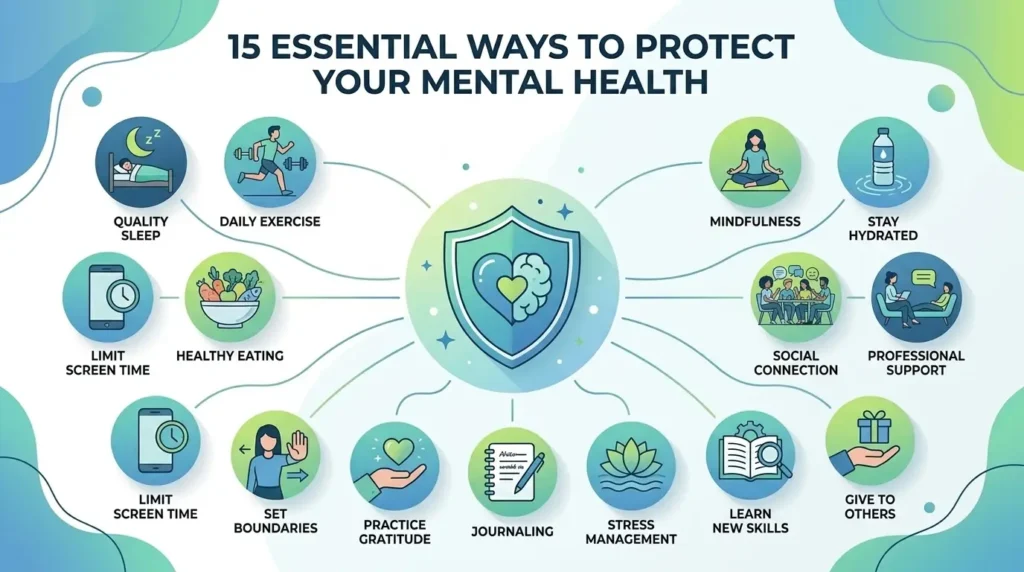
Conclusion
Protecting your mental health isn’t about avoiding all difficult feelings or living a perfectly stress-free life. It’s about building the daily habits that strengthen your resilience and equip you to handle life’s inevitable challenges.
Whether it’s getting consistent sleep, taking a short walk, practicing mindfulness, or connecting with a friend, small actions add up. Research shows that structured routines lower anxiety and depression. Consistent sleep schedules significantly reduce mental health risks. Even 10 minutes of daily walking may lower depression risk by 18%.
Start with one strategy from this guide today. Just one. Go to bed at the same time tonight. Take a 10-minute walk. Send a text to someone you love. Practice gratitude for a moment.
Small actions, repeated consistently, create meaningful change. You deserve to protect your mental health. And it starts with simple choices you can make today.
Medical Disclaimer
This article is for educational and informational purposes only and is not medical advice. Always consult with a qualified healthcare provider regarding any health concerns. If you are experiencing severe or persistent mental health issues, please seek professional support.

Hi, I’m Grace Mitchell, the content writer behind LaxiBoost.I believe that small daily habits can make a meaningful difference in how we think, feel, and live. Through LaxiBoost, I write about mental wellness, mindfulness, self-care, stress management, healthy habits, and personal growth in a way that’s simple, practical, and easy to understand. My goal is to turn reliable information into actionable guidance that anyone can apply in everyday life.
Every article I publish is carefully researched and written with readers in mind. If you’re looking to reduce stress, improve your mindset, or develop healthier routines, I hope LaxiBoost provides the support and inspiration you need on your wellness journey.
Thank you for visiting LaxiBoost and being part of this growing community.