Do you ever feel like you’re running on empty? You give so much of your time and energy to work, family, and daily responsibilities that there’s nothing left for you. Maybe you’ve started noticing more headaches, trouble sleeping, or just a general feeling of being overwhelmed.
You’re not alone. Many people struggle to prioritize their own needs. But here’s the truth: neglecting yourself doesn’t just make you tired—it can take a real toll on your health.
The good news? The benefits of self-care are real, measurable, and available to everyone. You don’t need expensive spa days or long vacations. Small, consistent actions can make a significant difference in how you feel.
In this article, you’ll learn:
- What self-care really means
- How it benefits your physical, mental, and emotional health
- What the research says about self-care
- Practical ways to start experiencing the benefits today
Let’s explore why taking care of yourself is one of the best things you can do.
What Is Self-Care?
Self-care is the practice of taking intentional action to preserve and improve your own health, well-being, and happiness. The World Health Organization (WHO) defines it as “the ability of individuals, families, and communities to promote health, prevent disease, maintain health, and cope with illness and disability.”
Simply put, self-care means doing things that help you function at your best. It includes basic activities like getting enough sleep, eating nutritious food, moving your body, and managing stress. It also includes emotional practices like setting boundaries, practicing self-compassion, and connecting with others.
Self-care isn’t selfish; it’s essential. Think of it as the foundation that supports everything else in your life. When you take care of yourself, you have more energy and patience for the people and things that matter most.
Why Is Self-Care Important?
In our busy world, it’s easy to put everyone else’s needs ahead of your own. However, consistently neglecting your own well-being comes at a cost.
When you don’t practice self-care, you may experience:
- Chronic stress and fatigue
- Poor sleep quality
- Weakened immune system
- Increased anxiety or irritability
- Difficulty concentrating
- Strained relationships
- Feelings of burnout
The WHO emphasizes that self-care interventions can improve health outcomes and give people greater autonomy and access to health services. It’s not just about feeling better—it’s about taking an active role in your own health.
Self-care matters because you matter. Your health and well-being are worth protecting. When you prioritize yourself, you’re better equipped to handle life’s challenges and show up for the people who depend on you.
Physical Health Benefits of Self-Care
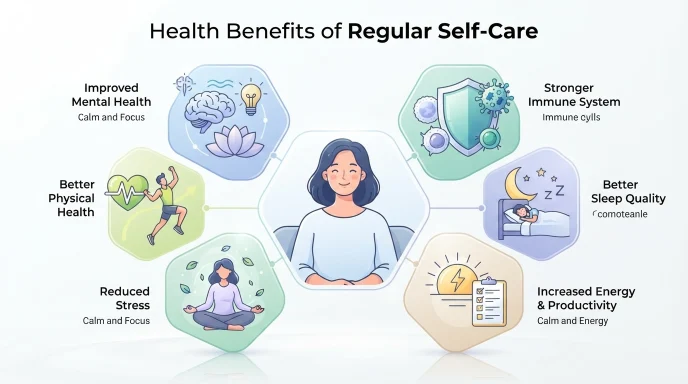
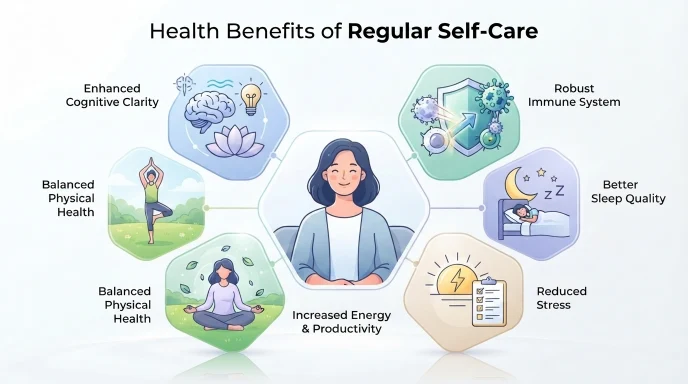
Your body responds to how you treat it. When you practice regular self-care, your physical health improves in several important ways.
Strengthens Your Immune System
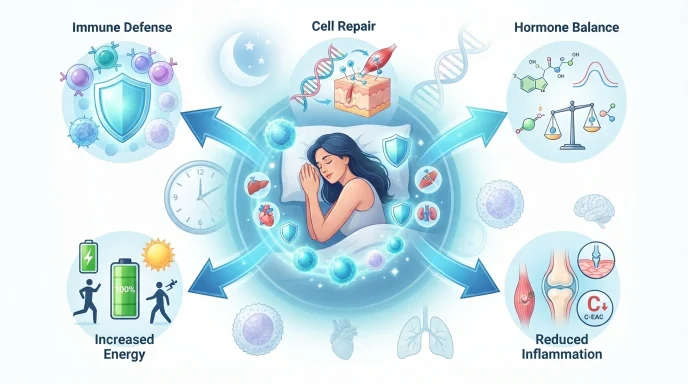
Taking care of yourself helps your immune system take care of you. The CDC notes that eating well, being physically active, and getting enough sleep all help strengthen your immune system.
Research also shows that self-care measures like regular exercise, maintaining a healthy weight, healthy sleep patterns, and cultivating mental resilience can help fortify your immune system against infections and other challenges. Even simple self-care practices, like a skin rubdown with a dry towel, have been shown to promote relaxation and improve immune function.
Boosts Energy Levels
When you’re constantly running on empty, your energy plummets. Self-care, if it’s resting when you’re tired, eating nourishing food, or moving your body, helps restore your energy. One study found that frequently practicing self-care was positively associated with workers’ vitality.
Improves Sleep Quality
Sleep is one of the most important forms of self-care. The Sleep Foundation emphasizes that consistent, high-quality sleep improves virtually all aspects of health. Good sleep supports immune function, memory, and emotional resilience.
Reduces Risk of Chronic Disease
Healthy lifestyle choices are a core part of self-care. The WHO recommends self-care interventions that include better nutrition and physical activity. These habits help reduce the risk of noncommunicable diseases like diabetes, heart disease, and stroke.
Supports Heart Health
The CDC reminds us that “your self-care is your health care.” A healthy diet, regular exercise, and reducing stress can all lower your risk for cardiovascular disease.
Mental Health Benefits of Self-Care
Self-care isn’t just about your body; it’s about your mind too. Research consistently shows that self-care practices have powerful effects on mental health.
Reduces Stress and Anxiety
This is one of the most well-documented benefits. A 2025 study found that a mindfulness and self-care intervention significantly lowered perceived stress in participants. Students and faculty reported that mindful practice changed the way they dealt with stress.
Another study found that mindful self-care was negatively correlated with anxiety and depression. Research also shows that self-care interventions can lead to sustained benefits in stress reduction, even months after the intervention ends.
Improves Mood and Emotional Well-Being
Self-care activities that bring you joy can boost your mood and outlook. When you take time for yourself, you’re sending a message that you matter. This enhances self-esteem and self-worth.
Builds Resilience
Life throws challenges at all of us. Self-care helps you build the emotional reserves to handle them. The WHO notes that self-care builds resilience and helps people cope with life’s challenges.
Enhances Self-Compassion
Research shows that self-care practices significantly increase self-compassion. When you practice self-care, you learn to treat yourself with the same kindness you’d offer a friend.
Supports Cognitive Function
Taking breaks, getting enough sleep, and managing stress all help your brain function better. Better sleep quality is linked to higher concentration, memory, and better mood. Research also shows that mindfulness practice can enhance focus at work and improve sleep quality.
Emotional and Social Benefits
Self-care doesn’t just benefit you; it benefits your relationships and emotional health too.
Improves Relationships
When you take care of yourself, you show up better for the people in your life. You have more patience, more energy, and more to give. Self-care helps you be more present and engaged in your relationships.
Supports Healthy Boundaries
Self-care includes setting and honoring healthy boundaries. The American Psychological Association notes that healthy boundaries are a form of self-care that can reduce the risk of workplace burnout. Setting boundaries early helps build healthier relationships.
Reduces Burnout
Self-care helps prevent the exhaustion that comes from giving too much to others without replenishing yourself. Even small acts of self-care can decrease feelings of exhaustion, burnout, stress, and even depression.
Enhances Social Connection
Self-care can include connecting with others. Research shows that social support is a key factor in both physical and mental health. When you prioritize your well-being, you’re better able to nurture meaningful connections.
Types of Self-Care
Self-care isn’t one-size-fits-all. Different areas of your life require different types of care. Here are the main types to consider:
Physical Self-Care
Activities that support your body’s health:
- Getting 7–9 hours of quality sleep
- Eating balanced, nutritious meals
- Staying hydrated
- Moving your body regularly
- Taking breaks to rest
Emotional Self-Care
Activities that help you process and express feelings:
- Journaling
- Practicing self-compassion
- Setting healthy boundaries
- Allowing yourself to feel without judgment
Mental Self-Care
Activities that stimulate and care for your mind:
- Reading for pleasure
- Learning new skills
- Taking breaks from technology
- Practicing mindfulness or meditation
Social Self-Care
Activities that nurture healthy relationships:
- Spending time with supportive people
- Having meaningful conversations
- Joining communities with shared interests
- Asking for help when you need it
Spiritual Self-Care
Activities that connect you with something larger than yourself:
- Meditation or prayer
- Spending time in nature
- Reflecting on your values and purpose
- Practicing gratitude
A well-rounded approach includes activities from several of these categories.
How to Build a Self-Care Routine
Ready to experience the benefits of self-care? Here’s how to get started.
Start Small
Choose one simple habit and practice it daily. Even five minutes of deep breathing or a short walk counts.
Identify Your Needs
Ask yourself: What areas of my life feel neglected? What activities leave me feeling energized? What makes me feel drained?
Schedule It
Put self-care in your calendar like any other important appointment. Treat it as non-negotiable.
Listen to Your Body
Pay attention to what you need. If you’re tired, rest. If you’re stressed, take a break. Your body and mind give you signals—learn to hear them.
Be Consistent
A few minutes each day is more effective than an hour once a month. Consistency matters more than duration.
Best Practices for Self-Care
Here are some tips to make your self-care routine more effective:
- Start your day intentionally. Even five minutes of quiet in the morning can set a positive tone.
- Unplug regularly. Set boundaries around screen time, especially before bed.
- Create a self-care space. Designate a corner of your home for relaxation.
- Find accountability. Share your goals with a friend or join a community.
- Be flexible. Your needs will change—adjust your routine accordingly.
Common Self-Care Mistakes
Avoid these pitfalls to make your self-care routine stick:
Mistake 1: Making It Too Complicated
Self-care doesn’t require elaborate rituals. Simple acts like deep breathing or a short walk count.
Mistake 2: Thinking It’s Selfish
You cannot pour from an empty cup. Taking care of yourself allows you to be more present for others.
Mistake 3: Being Inconsistent
Doing self-care once in a while doesn’t produce the same benefits as a regular practice. Aim for daily consistency.
Mistake 4: Ignoring Your Preferences
Your routine should reflect what you enjoy. Copying someone else’s routine won’t work if it doesn’t resonate with you.
What the Research Says
Scientific research supports the benefits of self-care across multiple areas of health.
Stress Reduction
A 2025 study found that participants in a mindfulness and self-care intervention reported significantly lower stress. Another study showed that self-care interventions led to sustained benefits in stress reduction, even six months after the intervention ended.
Mental Health
Research consistently demonstrates a positive association between mindful self-care and subjective well-being. Studies show that mindful self-care may be a potential strategy for managing anxiety, depression, and stress.
Physical Health
Higher self-care practices are associated with improved perceptions of both physical and mental health. The WHO promotes self-care interventions, including better nutrition and physical activity, to support health promotion.
Vitality and Well-Being
Frequently practicing self-care is positively associated with vitality and negatively associated with mental health complaints.
Real-Life Examples
The Busy Professional
A marketing manager with a demanding job started taking 10-minute walks during lunch. She noticed improved focus in the afternoon and better sleep at night.
The New Parent
A mother of a young child began practicing five minutes of deep breathing each morning. She found she had more patience throughout the day and felt less overwhelmed.
The College Student
A university student started taking short breaks between study sessions. She discovered she was more productive and retained information better.
Self-Care Myths vs. Facts
| Myth | Fact |
| Self-care is selfish | Self-care helps you show up better for others |
| Self-care requires money | Many self-care practices are free |
| Self-care takes too much time | Even 5–10 minutes a day makes a difference |
| Self-care is only for people with mental health issues | Self-care benefits everyone |
| Self-care is always relaxing | Some self-care (like exercise) can be challenging but still beneficial |
Frequently Asked Questions
1. What are the main benefits of self-care?
Self-care benefits your physical health (stronger immunity, more energy, better sleep), mental health (less stress and anxiety), emotional well-being (greater self-compassion), and relationships (more patience and presence).
2. Does self-care really reduce stress?
Yes. Research shows that mindfulness and self-care interventions significantly lower perceived stress. Self-care practices help your body and mind manage stress more effectively.
3. Can self-care help with anxiety and depression?
Studies indicate that mindful self-care may be a potential strategy for managing anxiety, depression, and stress. Regular self-care has been shown to support mental health.
4. How does self-care improve physical health?
Self-care actions like eating well, being physically active, getting enough sleep, and managing stress help prevent chronic disease, boost immune function, and increase energy levels.
5. Is self-care backed by science?
Yes. Numerous studies and organizations, including the World Health Organization, National Institutes of Health, and American Psychological Association, recognize the health benefits of self-care.
Key Takeaways
- Research shows that self-care practices significantly lower stress and anxiety
- Self-care supports physical health by promoting healthy eating, exercise, and sleep
- Regular self-care builds resilience and helps you cope with life’s challenges
- Even small, consistent acts of self-care make a meaningful difference
- Self-care isn’t selfish—it helps you show up better for others
- The WHO recognizes self-care as an essential part of health promotion
Conclusion
The benefits of self-care are real, measurable, and life-changing. This isn’t about being selfish or indulgent. It’s about recognizing that you are worth caring for.
When you take care of yourself, you’re not just improving your own life—you’re becoming more present, patient, and resilient for the people who matter to you. You’re building a foundation that supports everything else you do.
Start small. Be consistent. And give yourself permission to prioritize your own well-being. You deserve it.
Ready to Experience the Benefits of Self-Care?
Choose one small self-care practice to try today. Write it down, commit to it, and notice how you feel. Your future self will thank you.
Medical Disclaimer
The information provided in this article is for educational and informational purposes only and is not intended as medical advice. Always consult with a qualified healthcare provider regarding any health concerns. This content does not replace professional medical advice, diagnosis, or treatment.

Hi, I’m Noah Richardson, the content writer behind LaxiBoost. I write about self-care and personal well-being to help people build healthier and more balanced lives. My goal is to turn trusted information, easy-to-follow advice that anyone can apply in daily life.
I believe self-care is more than an occasional activity it’s a lifelong habit that supports both mental and physical well-being. Through my articles, I share simple strategies, practical tips, and research-based insights to help you reduce stress, improve your daily routine, and take better care of yourself with confidence.
Thank you for reading LaxiBoost. I hope my content helps you create healthier habits and enjoy a happier, more balanced lifestyle.