
Do you ever feel like your phone is an extension of your hand? Maybe you reach for it without thinking, scroll through social media until you lose track of time, or feel anxious when you’re away from it for more than a few minutes.
The average person spends about 4.5 hours a day on their phone, which adds up to roughly 13 years of your life if you live to be 80, as one 24-year-old who tried a digital detox pointed out.
Digital self-care is the practice of maintaining a healthy, balanced relationship with technology. It’s not about abandoning your devices or moving to a cabin in the woods. Instead, it’s about using technology in ways that support your well-being rather than drain it.
In this guide, you’ll discover:
- What digital self-care really means
- The benefits of building a healthier tech relationship
- Practical strategies to create boundaries with your devices
- Simple habits to make digital wellness part of your routine
Let’s explore how you can take back control of your digital life.
What Is Digital Self-Care?
Digital self-care is the practice of maintaining a healthy, balanced relationship with technology.

The concept of digital well-being encompasses the impact of digital technology on our overall health, including physical, mental, and social dimensions. Digital self-care is one key part of this broader framework. It involves:
- Mindful technology use. Being conscious of how, when, and why we use digital devices.
- Managing screen time. Balancing time spent on screens with offline activities.
- Digital detox. Periodically disconnecting from digital devices to rejuvenate.
- Healthy online interactions. Engaging with digital spaces in ways that support rather than harm mental health.
The World Health Organization (WHO) defines self-care as “the ability of individuals, families, and communities to promote health, prevent disease, maintain health, and cope with illness and disability with or without the support of a healthcare provider.” In our digital age, this includes how we manage our relationship with technology.
Why Digital Self-Care Matters
The impact of technology on our lives is profound.
Here’s what research tells us:
Mental health concerns. Excessive screen time and constant connectivity have been linked to stress, anxiety, and burnout. Social media, in particular, can impact self-esteem and mental health. Studies have found strong correlations between social media and internet addiction and negative outcomes like depression, anxiety, and stress.
Physical health impacts. Prolonged use of digital devices can result in issues such as eye strain, poor posture, and sedentary behavior. Research from the University of Cambridge found that exercise, even just going for a walk, can be as effective as conventional antidepressant drugs for boosting mood.
Sleep disruption. Blue light from screens suppresses melatonin production, making it harder to fall asleep. The University of Cambridge’s Professor Barbara Sahakian emphasizes that getting seven to eight hours of sleep per night is optimal for brain structure, cognition, and mental health.
Social relationship challenges. Over-reliance on digital communication can weaken face-to-face interactions and relationships, leading to feelings of isolation and loneliness .
Productivity and focus. Constant notifications and the urge to check devices can disrupt concentration and reduce productivity.
The good news? Research shows that even small changes in our digital habits can make a meaningful difference to our well-being.
Signs You May Benefit from Digital Self-Care
How do you know if your digital habits need attention? UCLA Health suggests watching for these signs:
- Anxiety when you cannot find your phone
- Disrupted sleep because of notifications and other phone activity
- Fear of missing out when away from your phone
- Feeling sad, angry, or anxious after spending time on social media
- Losing track of time while scrolling
- Needing to check your phone often, even while in the company of others
- Preferring to interact with people virtually instead of in person
If any of these sound familiar, it may be time to consider a more intentional approach to your digital life.
Setting Healthy Digital Boundaries
Creating boundaries with technology is one of the most effective forms of digital self-care.
Start with awareness. The first step is noticing your digital habits without judgment. Dr. Amanda Ferguson from Cambridge University recommends practicing mindfulness by pausing to notice and name the emotion you feel when you reach for your phone.
Add friction. Make it harder to mindlessly engage with apps. Small barriers like removing apps from your home screen, logging out between sessions, or using friction-based apps like One Sec can break the automatic loop.
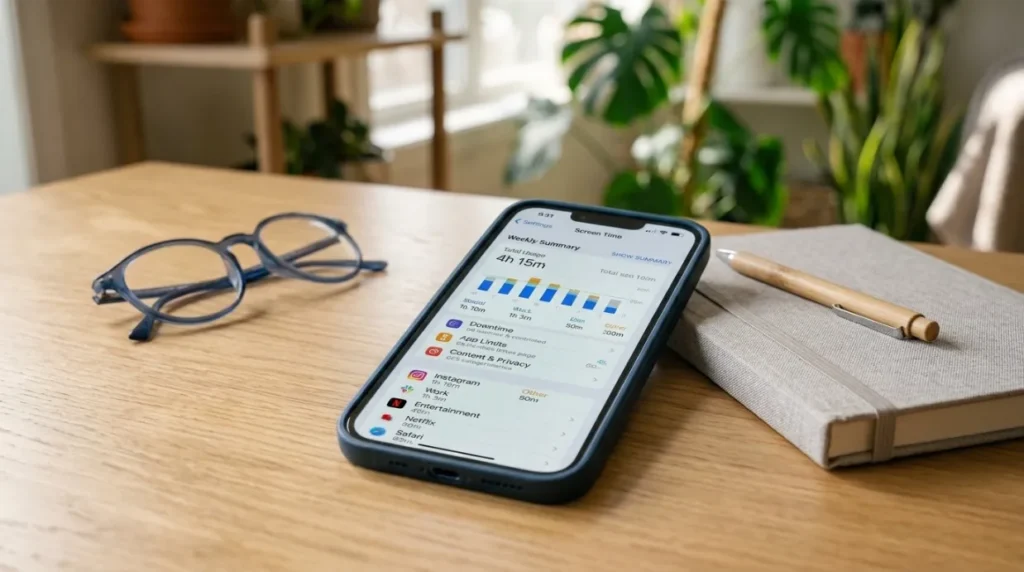
Set time limits. Use built-in tools like Screen Time or Digital Wellbeing to track and limit your usage. The average person spends about 4.5 hours a day on their phone; setting a limit can help you become more conscious of your habits.
Create boundaries with notifications. Turn off non-essential push notifications. Constantly being reminded that you have a new email or notification can create stress and pressure to respond right away.
Decide on your values. Ask yourself: Does this app nourish me, or does it exhaust me? . This question can help guide your digital choices.
Morning Digital Self-Care Practices
How you start your day sets the tone. Creating a mindful morning routine can transform your relationship with technology.

Wait before you check your phone. Our brains need around 30 minutes to wake up from sleep inertia, and we only reach full recovery in 1-2 hours after getting out of bed. Try not to check your phone for the first hour after you wake up.
Put your phone on airplane mode before bed and keep it that way for 15 minutes after waking.
Start with non-digital activities. When you wake up, your brain needs time to just be. Stretch, drink water, or step outside for sunlight instead of immediately opening apps.
Do a short non-digital activity before going online. This small shift has a big effect on how grounded you feel throughout the day.
Daytime Digital Wellness Habits
Throughout your day, small habits can help you maintain a healthier relationship with technology.

Take regular breaks from screens. Our research on habit formation suggests that behaviors we want to reduce become easier to manage when they require more effort to initiate. Use the Pomodoro Technique: 25 minutes of work, 5 minutes of rest. Every 90 minutes, take a full-screen break: stretch, walk, or just look out the window.
Practice noticing the urge to use technology. Instead of automatically opening apps, pause to notice and name what you’re feeling. For example, “I feel bored; I want to check Instagram” creates a gap between the impulse and the behavior.
Avoid online spaces that maximize social comparison. Research shows that comparing ourselves to others is linked to lower self-esteem, mood difficulties, and increased anxiety. Approach platforms that highlight social status (likes, views, follower counts) with caution.
Switch your phone to grayscale mode. This can reduce mindless scrolling by making the screen less visually stimulating.
Evening and Bedtime Digital Habits
The hour before bed is crucial for sleep quality and mental restoration.

Set a screen curfew. Try to avoid screens for 30-60 minutes before bed. Blue light, emotional stimulation, and never-ending feeds keep your brain wired.
Charge your phone outside the bedroom. If possible, keep devices in another room while you sleep. Use an old-fashioned alarm clock instead of your phone to reduce nighttime screen exposure.
Replace screen time with calming activities. Try reading a physical book, listening to a calm playlist, or journaling before sleep. These activities support the transition to rest.
Create a good night-time routine. This helps prepare you to fall asleep more easily. Read an enjoyable book, watch a light, happy movie, or think about a relaxing place.
Mindful Social Media Use
Social media can be a source of connection and community. But it can also be a source of stress and comparison.

Follow accounts that calm or inspire you. Nature, art, and mental health accounts can contribute to a healthier feed.
Unfollow or mute accounts that make you feel anxious, sad, or irritated.
Limit your time on social media. One study limited social media use to 30 minutes per day for two weeks and observed significant improvements in sleep quality. Even with a modest cap, participants saw lasting benefits.
Notice how you feel after using social media. If you notice feelings of anxiety, sadness, or anger after spending time on social media, it may be time to reconsider how you engage with it.
Digital Declutter and Environment Cleanup
Your digital environment affects your mental space just as much as your physical environment.

Clear your home screen. Organize your phone so helpful apps are front and center and draining apps are in the back. This small change can make it easier to use your phone intentionally.
Delete unnecessary apps. Consider removing social media apps from your phone and only accessing them from your computer or web browser. Simply deleting your most frequently used apps reduces the temptation to constantly check and refresh.
Log out between sessions. Making it harder to access your accounts can help break the automatic scrolling loop.
Reorganize your digital spaces regularly. Just as you might declutter a room, periodically review your apps, subscriptions, and notifications to keep your digital life aligned with your priorities.
Creating Screen-Free Zones and Times
Designating spaces and times without screens can help create healthier boundaries.
Create no-phones-allowed areas. Set clear rules for certain areas or events in your home . For example, keep phones away during mealtimes or family movie nights.
Plan screen-free activities. Step outside your comfort zone to learn a new skill or hobby. If you’re going for a weekend hike or taking a bike ride with a friend, plan outdoor activities that don’t involve technology.
Practice screen-free mornings. Keep your phone away for the first hour after waking up. This allows your brain to wake up naturally before engaging with the digital world.
Make the bedroom a screen-free zone. Removing devices from the bedroom supports better sleep and a more peaceful environment.
Using Technology to Support Your Wellbeing
Not all tech is bad. Some digital tools can actually support your mental health and digital habits.
Try meditation and mindfulness apps. Apps like Insight Timer or Headspace offer guided meditation and breathing exercises.
Use focus apps. Forest helps you stay focused by growing a digital tree when you don’t use your phone.
Track and limit your usage. Screen Time or Digital Wellbeing can help you set soft limits on your screen use. The Screen Time app gives you a daily average of your phone usage, downtime, and the ability to set limits on apps.
Engage with learning apps. For some people, technology is a learning partner. Apps like Duolingo can provide short, therapeutic learning sessions during the day.
Connect with like-minded communities. Platforms like Goodreads or Letterboxd can help you bond with people who share literary or cinematic interests.
Digital Detox: What It Is and How to Try It
A digital detox is a period in which a person reduces or completely stops their use of electronic devices like a smartphone. It’s a way to reset your relationship with technology and give your mind and body a break from constant connectivity.

What are the benefits? Research suggests that a digital detox can offer the following benefits:
- Lower levels of boredom
- Reduced stress, depression, and anxiety
- Better self-regulation and self-control
- Improved sleep
- Better overall life satisfaction
- Increased focus and productivity
- Strengthened relationships through face-to-face interaction
However, a 2025 review found no significant effects on stress, life satisfaction, and mental well-being, suggesting this may be due to external factors. It’s worth noting that some people may experience feelings of loneliness or missing out.
How to try a digital detox:
Start small. You don’t need to go cold turkey. Try a single phone-free day or install app timers on your devices. One woman who swapped her smartphone for a flip phone for a week said the first 24 hours were the hardest, but by the end of the second day, the anxiety had completely switched off.
Set expectations in advance. Let friends, family, or work contacts know you’ll be offline. Turn off non-essential notifications and set out-of-office replies if needed.
Plan screen-free activities. This is key to a successful digital detox.
Don’t aim for perfection. A digital detox doesn’t need to involve total elimination. You may decide just to try it for a weekend or power down for a certain number of hours each day.
Be kind to yourself. If you struggle, that’s okay. The goal is progress, not perfection. As one expert notes, the long-term solution is to build balance, boundaries, and digital resilience.
Frequently Asked Questions
1. What is digital self-care?
Digital self-care is the practice of maintaining a healthy, balanced relationship with technology. It includes mindful technology use, setting boundaries, and creating habits that support your well-being rather than drain it.
2. Why is digital self-care important?
Digital self-care matters because excessive screen time and constant connectivity have been linked to stress, anxiety, depression, poor sleep, and weakened face-to-face relationships. It helps you use technology in ways that enhance rather than harm your mental and physical health.
3. What are the signs I need a digital detox?
Signs include anxiety when you can’t find your phone, disrupted sleep from notifications, fear of missing out, feeling sad or angry after social media, losing track of time while scrolling, and neglecting face-to-face relationships.
4. How can I reduce screen time?
Try setting time limits using Screen Time or Digital Wellbeing apps, removing apps from your home screen, logging out between sessions, turning off non-essential notifications, and using friction-based apps like One Sec to break the automatic scrolling loop.
5. What is a digital detox?
A digital detox is a period in which a person voluntarily reduces or stops their use of electronic devices like smartphones or social media. It can improve mental well-being, sleep, focus, and relationships.
6. Is all screen time bad?
No. Many people find screen time therapeutic, using it for learning, community connection, or creative inspiration. What matters most is how you engage online, whether you’re mindlessly scrolling or intentionally connecting.
7. How can I make mornings less screen-focused?
Try not to check your phone for the first hour after waking. Put your phone on airplane mode before bed and keep it that way for 15 minutes after waking. Stretch, drink water, or go outside instead of immediately opening apps.
8. What does the research say about digital self-care?
Studies show that digital self-care practices like setting boundaries, reducing social media use, and taking breaks from screens can reduce stress and depressive symptoms, improve sleep, and enhance overall life satisfaction.
Key Takeaways
- Digital self-care is about building a healthy, balanced relationship with technology, not abandoning it
- Excessive screen time is linked to stress, anxiety, depression, and poor sleep
- Small changes, like waiting an hour before checking your phone in the morning can have a big impact
- Setting boundaries, creating screen-free zones, and practicing mindful social media use support digital well-being
- A digital detox can improve mental health, sleep, and focus, though it may feel challenging at first
- Technology can also support your well-being through meditation apps, focus tools, and learning resources
- Start small, be kind to yourself, and build habits gradually

Conclusion
Digital self-care isn’t about throwing away your phone or moving to the woods. It’s about taking back control using technology in ways that support your well-being rather than drain it.
When you create boundaries with your devices, you make space for what matters: connection with others, time for hobbies, restful sleep, and moments of quiet reflection.
Start with one practice from this guide today. Just one. Put your phone away an hour before bed. Wait 15 minutes before checking it in the morning. Unfollow one account that makes you feel anxious. Set a time limit on a social media app.
Small changes add up. And you deserve to feel in control of your digital life, not the other way around.
Medical Disclaimer
This article is for educational and informational purposes only and is not medical advice. Always consult with a qualified healthcare provider regarding any health concerns. If you are experiencing severe or persistent mental health issues, please seek professional support.

Hi, I’m Noah Richardson, the content writer behind LaxiBoost. I write about self-care and personal well-being to help people build healthier and more balanced lives. My goal is to turn trusted information, easy-to-follow advice that anyone can apply in daily life.
I believe self-care is more than an occasional activity it’s a lifelong habit that supports both mental and physical well-being. Through my articles, I share simple strategies, practical tips, and research-based insights to help you reduce stress, improve your daily routine, and take better care of yourself with confidence.
Thank you for reading LaxiBoost. I hope my content helps you create healthier habits and enjoy a happier, more balanced lifestyle.