Do you ever feel like there just aren’t enough hours in the day? Between work deadlines, family responsibilities, and endless to-do lists, the idea of “self-care” might sound like another item you simply don’t have time for.
You’re not alone. The booming self-care industry, with its expensive retreats and elaborate routines, often adds stress for busy professionals. Ironically, the pressure to practice self-care can become another source of stress.
However, here’s the truth: self-care doesn’t have to mean doing more. As experts like Dr. Eleni Nicolaou argue, true self-care isn’t about grand rituals but small, consistent moments. Adding another big ritual to your day isn’t the answer; the real value lies in small, consistent moments that anyone can fit in, even on the hardest days.
Dr. Amy Oxentenko of the Mayo Clinic puts it simply: “You don’t need to have hours per day to invest in this. Self-care can come in small little pieces that can have significant dividends in the end.”
In this guide, you’ll learn:
- What self-care really means for busy people
- Simple micro self-care practices that take 5 minutes or less
- Practical tips to weave self-care into your existing routine
- How to avoid common self-care mistakes
Let’s explore how you can nurture yourself without adding more stress to your already full plate.
What Self-Care Really Means for Busy People
Self-care is one of the most commonly used but poorly understood concepts today. For some, it brings to mind indulgence, luxury, or performative wellness culture. For others, it feels selfish, soft, or unrealistic.
But self-care, when done properly, actually helps fuel us to be our best selves and maximizes our performance and achievement.

The World Health Organization (WHO) defines self-care as “the ability of individuals, families, and communities to promote and maintain their own health, prevent disease, and cope with illness.” Self-care actions include healthy practices, habits, and lifestyle choices such as eating a healthy diet, being physically active, getting enough sleep, and connecting with others.
For busy people, self-care isn’t about adding more to your already full plate. Rather, it’s about making intentional shifts that honor both your professional development and your well-being.
Why Self-Care Matters When You’re Busy
You might wonder, can self-care really make a difference when I’m this busy?
Research consistently shows that even small doses of self-care can help reduce stress, maintain physical and mental health, and avoid burnout. Evidence demonstrates that even taking five minutes a day to incorporate self-care practices can have a positive effect on overall health.

Here’s what the research says:
- Reduces stress and burnout: Chronic stress contributes to burnout, reduced productivity, and poorer physical and mental health. Fortunately, self-care practices can significantly lower stress levels.
- Improves performance: Self-care actually helps fuel us to be our best selves and maximize our performance gains and achievement.
- Builds resilience: Over time, self-care strengthens your brain’s resilience pathways.
- Supports physical health: Self-care is based on lifestyle medicine, an evidence-based approach to disease prevention and treatment.
- Helps you show up better for others: Self-care not only benefits people’s health but also enables them to carry out their jobs more effectively.
The Science Behind Micro Self-Care
Small actions like mindful breathing, gratitude journaling, or a quick walk tap into the mind-body connection. These practices calm your nervous system and strengthen your brain’s resilience pathways over time.
Key scientific insights:
- The power of small habits: Behavioral researchers have long found that small habits performed consistently are more sustainable than ambitious routines that demand high levels of motivation. Tiny behaviors repeated daily eventually become automatic, making them far easier to maintain than dramatic lifestyle overhauls.
- Wakeful rest matters: Neuroscientists have discovered that periods of wakeful rest allow the brain to consolidate memories, process information, and recover from sustained attention.
- Breathing works: Slow, deliberate breathing activates the parasympathetic nervous system, which helps reduce heart rate and stress.
- Consistency over intensity: Self-care works best when it is practiced consistently.

Rather than asking how to carve out an extra hour each day, the better question may be, “What can you do in five minutes that helps your nervous system reset?”
5-Minute Self-Care Practices
These quick practices can be completed in five minutes or less. Consequently, they provide a viable alternative to burning the candle at both ends.
Breathing and Mindfulness
Try box breathing. Inhale for four counts, hold for four, exhale for four, and hold for four. Repeat three times. Athletes and frontline professionals alike use this technique to reset the nervous system.
Take a one-minute breathing break. Inhale for four seconds, hold for four seconds, exhale for six seconds. This reduces stress and increases clarity.
Practice five minutes of quiet. Instead of reaching for your phone during every spare moment, spend five to ten minutes sitting quietly. Look out a window or simply allow your mind to settle.
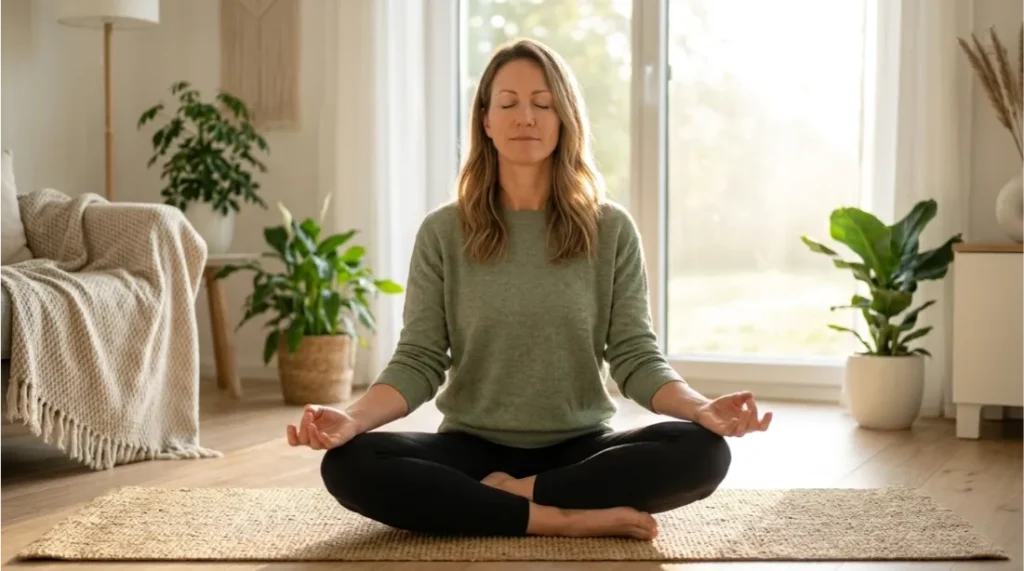
Check in with yourself. Pause at different points in your day and practice mindfulness.
Movement
Take a movement break. Take a minute to stretch or take a quick walk around your office.
Walk without distractions. Instead of checking your phone, take a brief walk and simply notice your surroundings.
Do a quick stretch at your desk. Release tension in your neck, shoulders, and back.
Mental Reset
Practice a simple gratitude exercise. Take a few minutes to write down three things you’re grateful for today. The self-care benefits of gratitude are well-documented.
Jot down your thoughts. Writing down what’s on your mind can clear mental clutter.
Take in the good. Instead of immediately moving on to the next thing on your to-do list, take a few moments to relish the feeling of accomplishment.
Engage in a small creative activity. Doodle, color, or do something creative for a few minutes.
Environment
Organize a tiny space. Clear off one corner of your desk or tidy one drawer.
Make your coffee or tea mindful. Instead of rushing, take a moment to notice the aroma, warmth, and taste.
Self-Care at Work
You spend a significant portion of your day at work. These tips can help you practice self-care during work hours.
Block out your calendar. Block off parts of your calendar for specific things if it’s a lunch break, a short walk, or time to decompress.
Pause between meetings. Take a brief moment between meetings to reset and breathe.
Take a few steady breaths during moments of pressure. Even a few seconds of conscious breathing can help.
Notice physical tension and release it intentionally. If you’ve been hunched over a computer, take a moment to stretch.

Use your lunch break for movement. When evenings are booked up, exercise on your lunch break. Prepare your clothes and gear the night before.
Pack lunches and a water bottle ahead of time. This reduces stress and supports healthy eating.
Take short breaks from screens throughout the day. Digital detoxing can provide instant relaxation.
Physical Self-Care for Busy People
Caring for your body is foundational to self-care. These tips fit into even the busiest schedule.
Prioritize sleep. Quality sleep is one of the most powerful forms of self-care. Establish a consistent bedtime that allows for seven to eight hours of rest. The WHO lists getting enough sleep as a key self-care action.
Stay hydrated. Drinking water is one of the simplest forms of self-care. Keep a water bottle at your desk.
Stock healthy snacks. Nuts, seeds, dried fruit, or protein bars provide sustained energy.
Consider bulk-preparing meals. Prepare meals in advance and freeze them so you don’t have to worry about what you’ll eat on busy days.
Incorporate movement into your day. The CDC recommends at least 2 hours and 30 minutes of moderate-intensity aerobic physical activity each week. Even 10 minutes of brisk walking or one flight of stairs every hour counts.
Mental and Emotional Self-Care
Practice gratitude daily. Remind yourself of things you are grateful for, be specific, and write them down.
Set boundaries and learn to say no. Assess your commitments and protect your time and energy.

Engage in low-stress hobbies. Dedicate some time each week for activities you enjoy, such as reading, knitting, or listening to music.
Practice self-compassion. Speak to yourself as you would a friend.
Make time for something you actually enjoy. Even 20 minutes of a hobby can lift your mood.
Social Self-Care
Make a connection with other busy adults. Look for naturally occurring opportunities in your day to make a connection with a neighbor, colleague, or store clerk.

Call or text someone you trust. Even a quick check-in can boost your mood.
Reach out for support. Sharing workloads with others can free up time for self-care.
Volunteer. The time commitment need not be extreme; even small acts of service can be meaningful.
Environmental Self-Care
Declutter and organize. A tidy space boosts focus and reduces stress.
Create a calming space. Designate a corner of your home for relaxation.
Spend time in nature. Even a few minutes outdoors can reduce stress.

Take in a movie or visit a park. Find an interesting place and spend time there.
How to Build a Sustainable Self-Care Routine
Building a self-care routine that fits your busy life takes intention and flexibility.
Start small. Choose just one or two practices to begin with. Even small acts of self-care can have a big impact.
Be consistent. A few minutes each day is more effective than an hour once a month. Self-care works best when practiced regularly.
Stack self-care onto existing routines. Attach a new habit to something you already do. For example, practice gratitude while brushing your teeth or stretch while waiting for coffee to brew.
Block out intentional time. Put self-care in your calendar like any other important appointment.
Turn routine activities into self-care. Everyday activities like housework, errands, and commuting can multitask as self-care. Listen to an audiobook or upbeat playlist while doing chores.
Redefine it as an act of kindness for future you. Think about self-care tasks as something you’re doing for your future self.
Be kind to yourself. If you miss a day, don’t give up; just start again tomorrow.
Common Self-Care Mistakes to Avoid
Mistake 1: Thinking self-care requires hours. “You don’t need to have hours per day to invest in this,” says Dr. Oxentenko. “Self-care can come in small little pieces.”
Mistake 2: Making it too complicated. Self-care doesn’t have to be elaborate. Simple acts like deep breathing or a short walk count.
Mistake 3: Believing self-care is selfish. Self-care helps you show up better for others. Psychological research has consistently shown that self-care enables people to carry out their jobs more effectively.
Mistake 4: Being inconsistent. Doing self-care once in a while doesn’t produce the same benefits as regular practice.
Mistake 5: Waiting until you’re burned out. Self-care is most effective when it’s proactive, not reactive.
Mistake 6: Comparing your self-care to others. Self-care should reflect what you enjoy and what works for you.
Expert Tips for Sustainable Self-Care
Redefine what self-care means for you. For busy people, adding another big ritual to their day isn’t the answer. The real value lies in small, consistent moments that anyone can fit in, even on the hardest days.
Find stress-busting strategies that work for you. What helps one person may not help another.
Make time for small resets. Rather than asking how to carve out an extra hour each day, ask, “What can you do in five minutes that helps your nervous system reset?”
Remember that self-care is performance-enhancing. Self-care, when done properly, helps fuel us to be our best selves and will maximize our performance gains and achievement.
Focus on the ritual, not the activity. The act of taking a moment for yourself if it’s making tea, stepping outside, or taking a few deep breaths signals to your body that it’s time to slow down.
Frequently Asked Questions
1. How can I practice self-care when I have no time?
Even five minutes counts. Try quick resets like deep breathing, stretching, or stepping outside. Evidence shows that even taking five minutes a day to incorporate self-care practices can have a positive effect.
2. What are the best self-care tips for busy people?
The best tips are ones that fit into your existing routine. Try box breathing, taking short movement breaks, practicing gratitude, and turning routine activities into self-care moments.
3. Is self-care really necessary when I’m busy?
Yes. Self-care helps fuel us to be our best selves and maximizes our performance and achievement. It also reduces stress, prevents burnout, and helps you show up better for others.
4. What is micro self-care?
Micro self-care refers to small, quick practices that take five minutes or less. These can include mindful breathing, gratitude exercises, quick stretches, or simply taking a moment of quiet.
5. Does self-care really reduce stress?
Yes. Research consistently shows that self-care practices can significantly lower stress levels. Even small doses of self-care can help reduce stress and avoid burnout.
6. How do I make self-care a habit when I’m busy?
Start small with one or two practices. Stack them onto existing routines; for example, practice gratitude while brushing your teeth. Block out intentional time in your calendar.
7. What does the Mayo Clinic say about self-care for busy people?
Dr. Amy Oxentenko of the Mayo Clinic says, “You don’t need to have hours per day to invest in this. Self-care can come in small little pieces that can have significant dividends in the end.”
Key Takeaways
- Self-care for busy people doesn’t mean doing more; it means making small, intentional shifts
- Even five minutes of self-care can have a positive effect on your health
- Self-care helps fuel us to be our best selves and maximizes performance
- The WHO recognizes self-care as essential for health and well-being
- Micro practices like box breathing, gratitude, and short movement breaks can fit into any schedule
- Self-care works best when practiced consistently
- Self-care isn’t selfish; it helps you show up better for others

Conclusion
Self-care doesn’t have to be complicated, expensive, or time-consuming. For busy people, the most powerful self-care practices are often the simplest ones, the ones that fit into your existing routine without adding more stress.
As Dr. Amy Oxentenko of the Mayo Clinic reminds us: “You don’t need to have hours per day to invest in this. Self-care can come in small little pieces that can have significant dividends in the end.”
Evidence shows that even taking five minutes a day to incorporate self-care practices can have a positive effect on overall health. If it’s box breathing, a short walk, a moment of gratitude, or simply sitting quietly, these small moments add up.
Start with one practice from this guide today. Just one. Take five deep breaths. Step outside for a moment. Write down one thing you’re grateful for.
Small actions, repeated consistently, create meaningful change. You deserve to feel your best even when you’re busy. And the best part? It starts with simple choices you can make right now.
Ready to Start Your Self-Care Journey?
Choose one self-care tip from this guide and commit to it for the next seven days. Write it down, set a reminder, and notice how you feel. Your future self will thank you.
Medical Disclaimer
The information provided in this article is for educational and informational purposes only and is not intended as medical advice. Always consult with a qualified healthcare provider regarding any health concerns. This content does not replace professional medical advice, diagnosis, or treatment.

Hi, I’m Noah Richardson, the content writer behind LaxiBoost. I write about self-care and personal well-being to help people build healthier and more balanced lives. My goal is to turn trusted information, easy-to-follow advice that anyone can apply in daily life.
I believe self-care is more than an occasional activity it’s a lifelong habit that supports both mental and physical well-being. Through my articles, I share simple strategies, practical tips, and research-based insights to help you reduce stress, improve your daily routine, and take better care of yourself with confidence.
Thank you for reading LaxiBoost. I hope my content helps you create healthier habits and enjoy a happier, more balanced lifestyle.