Have you ever hit the end of a long day feeling completely drained, only to realize you did not take five minutes for yourself? When you are constantly balancing work, family, and daily chores, putting your own needs first can feel nearly impossible.
When self-care drops off your to-do list, stress builds up fast. Over time, running on empty can leave you feeling overwhelmed, disrupt your sleep habits, and drain your physical energy. Neglecting your emotional well-being does not mean you are failing—it simply means modern life demands too much of your time.
The good news is that caring for yourself does not require a total lifestyle overhaul or expensive spa retreats. Simple, intentional tools can make a significant difference in your day. Adding targeted self care products to your space can turn small moments into restorative pauses, helping you reset without adding stress to your schedule.
In this guide, you will discover:
- How the right self care products support your personal well-being.
- Key items that promote better sleep, stress relief, and relaxation.
- Simple ways to build a healthy routine you can actually stick with.
Core Article Body
What Are Self Care Products?
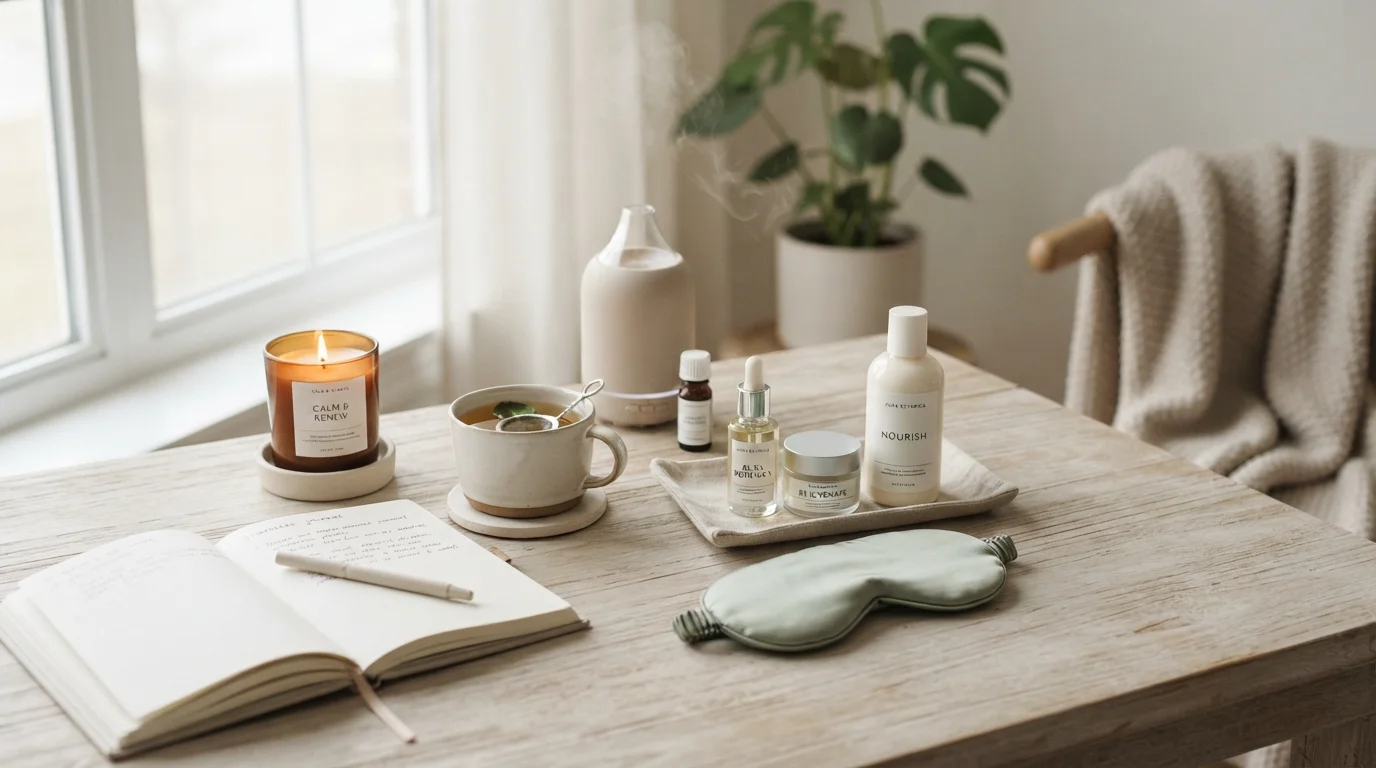
Self care products are physical items, tools, or resources specifically designed to support your physical, mental, and emotional well-being. Rather than being simple luxuries, these items serve functional purposes in your daily life. They range from weighted blankets and aromatherapy diffusers to journals, skincare tools, and ergonomic office accessories.
At their core, these products make healthy habits easier to start and sustain. They act as gentle sensory cues that remind you to slow down, breathe, and pay attention to your personal needs throughout a busy workday.
Why Self Care Products Matter Today
Modern schedules leave very little downtime. Between constant screen time, work deadlines, and household obligations, your body’s stress response often stays activated longer than it should.
Research suggests that chronic stress can negatively impact your immune function, mood, and sleep quality. Having dedicated tools in your physical environment offers a practical way to interrupt that stress cycle. Using a calming pillow mist or sitting down with a guided journal creates a clear boundary between work time and personal rest, making work-life balance feel more tangible.
Key Health & Lifestyle Benefits
Incorporating intentional wellness items into your day offers several meaningful benefits:
- Lowered Stress Levels: Sensory tools like essential oil diffusers or weighted lap pads can help soothe your nervous system, making relaxation techniques more effective.
- Improved Sleep Habits: Items like blackout curtains, sound machines, or soothing herbal teas signals to your brain that it is time to wind down, supporting healthy sleep habits.
- Enhanced Mental Focus: Using a structured planner or journal reduces mental clutter, allowing you to organize your thoughts and build a healthier mindset.
- Sustained Energy: Daily physical care tools, such as massage rollers or gentle body lotions, encourage circulation and ease tension, supporting physical comfort.
Common Types of Self Care Products
To build a balanced routine, it helps to look at self care products across four main functional categories:
| Category | Primary Focus | Popular Product Examples |
| Relaxation & Sleep | Nervous system support & sleep hygiene | Weighted blankets, white noise machines, silk eye masks, pillow mists |
| Mindfulness & Mental Wellness | Stress management & emotional clarity | Guided journals, habit trackers, mindfulness app subscriptions, prompt cards |
| Physical Body & Recovery | Muscle relief & circulation | Foam rollers, acupressure mats, heated neck wraps, bath salts |
| Skincare & Sensory Care | Daily hygiene rituals & mood enhancement | Aromatherapy diffusers, gentle face cleansers, body oils, soothing candles |
1.Assess Your Immediate Needs:Start where you feel the most drained.
Take a moment to reflect on your current pain points. Are you struggling to fall asleep, feeling physically sore, or dealing with mental burnout? Choose a product category that directly addresses your primary daily challenge.
2.Start Small with One Item:Avoid overwhelming your schedule.
Instead of buying an entire catalog of wellness items, select just one item to incorporate into your day. For example, if nighttime anxiety keeps you awake, start with a weighted blanket or a dimmable reading light.
3.Pair the Product with an Existing Habit:Use habit stacking for consistency.
Attach the new tool to something you already do every day. If you drink tea every morning, place your guided journal right next to your mug so you remember to write for two minutes while it brews.
4.Evaluate and Adjust:Listen to your body’s feedback.
Use your new tool consistently for two weeks. Notice if your stress levels improve or if your sleep habits feel more consistent. Keep what works and pass on what feels like an chore.
Best Practices for a Healthy Routine
To get the most out of your wellness tools, keep these practical guidelines in mind:
- Keep Items Visible: Store your journal on your nightstand or your massage roller near your couch. Out of sight often means out of use.
- Focus on Quality Over Quantity: A few well-chosen, high-quality self care products bring more value than a closet full of unused gadgets.
- Create Intentional Triggers: Use sensory tools—like lighting a specific candle only during evening relaxation—to train your brain to recognize rest times.
- Maintain Consistency: Small daily habits, like spending five minutes with a foam roller, yield better long-term results than an occasional two-hour spa trip.
Common Mistakes to Avoid
- Overcomplicating the Routine: Buying too many items at once can make self-care feel like another exhausting task on your daily list.
- Confusing Self-Care with Retail Therapy: Purchasing items without a plan for how they fit into your day rarely leads to long-term emotional well-being.
- Expecting Instant Solutions: Wellness tools support your overall health, but they take time and consistent use to show lasting benefits.
- Neglecting Basic Needs: Self care products work best when paired with fundamentals like balanced nutrition, physical activity, and adequate hydration.
Myths vs. Facts About Self Care Products
- Myth: Self care products are expensive luxuries meant only for pampering.
- Fact: Many effective tools, like basic journals, blue-light blocking glasses, or simple bath salts, are budget-friendly and focus entirely on functional stress relief.
- Myth: Using self care products is selfish when you have family obligations.
- Fact: Supporting your personal well-being replenishes your energy, allowing you to show up more fully for those around you.
- Myth: A product can fix chronic stress on its own.
- Fact: Tools are meant to facilitate healthy habits, not replace healthy sleep habits, boundary setting, or professional care when needed.
Expert Perspective & Real-World Application
Consider Sarah, a 38-year-old remote marketing manager and parent. By 3 PM every day, she felt mentally exhausted, overwhelmed by screen light, and sore from sitting at her desk. Her evenings were spent rushing through chores until she collapsed into bed, struggling to quiet her mind.
Rather than attempting a dramatic lifestyle shift, Sarah introduced three functional tools into her day:
- A Weighted Heating Pad: She placed this over her shoulders during her afternoon emails to release physical tension.
- A Lavender Diffuser: She set a timer on her bedside table to turn on 30 minutes before bed, signaling it was time to put away her phone.
- A 5-Minute Prompt Journal: She left it on top of her pillow so she could write down her thoughts before sleeping.
Within three weeks, Sarah noticed that her shoulder tightness decreased and her mind felt quieter at night. The products did not change her busy schedule, but they gave her structured, effortless ways to care for her emotional well-being throughout the day.
People Also Ask (FAQs)
What are the best self care products for beginners?
The best beginner tools are simple, functional items that fit easily into your daily life without taking up extra time. Excellent starting options include a high-quality journal, a weighted lap blanket, an essential oil diffuser, or a supportive water bottle.
How do self care products help with stress management?
These tools act as physical and sensory triggers that signal your body to slow down and relax. Items like acupressure mats, aromatherapy, or heating pads ease muscle tension and encourage deep breathing, supporting your nervous system.
Are expensive self care products better than budget options?
Not necessarily. The effectiveness of a wellness tool depends on how consistently you use it, not its price tag. Budget-friendly options like basic journals, herbal teas, or simple massage balls offer the same functional benefits as luxury alternatives.
How do I build a healthy self-care routine with products?
Start by choosing one product that addresses your biggest daily frustration, such as poor sleep or tense muscles. Pair that item with an existing daily habit, like using a body lotion right after your morning shower, to build a sustainable routine.
Can self care products replace professional mental health care?
No, self care products are designed to support day-to-day wellness and stress management. While they encourage a healthy mindset, they do not replace therapy, medical treatment, or professional mental health support.
Summary & Medical Disclaimer
Key Takeaways
- Focus on Function: Choose self care products that address specific daily challenges like poor sleep, sore muscles, or high stress.
- Start Small: Introduce one new tool at a time and pair it with an existing daily habit to make it last.
- Keep It Simple: Effective wellness tools do not need to be expensive or complex to deliver genuine benefits.
- Prioritize Consistency: Daily, short moments of rest using your chosen items offer better support than occasional, long routines.
Conclusion
Taking care of yourself is not a luxury—it is an essential part of living a balanced, fulfilling life. By selecting a few practical self care products that fit naturally into your day, you can turn routine moments into opportunities for rest and renewal. Remember that every small step counts on your wellness journey. Choose one simple tool today, listen to what your body needs, and give yourself permission to pause.

Hi, I’m Noah Richardson, the content writer behind LaxiBoost. I write about self-care and personal well-being to help people build healthier and more balanced lives. My goal is to turn trusted information, easy-to-follow advice that anyone can apply in daily life.
I believe self-care is more than an occasional activity it’s a lifelong habit that supports both mental and physical well-being. Through my articles, I share simple strategies, practical tips, and research-based insights to help you reduce stress, improve your daily routine, and take better care of yourself with confidence.
Thank you for reading LaxiBoost. I hope my content helps you create healthier habits and enjoy a happier, more balanced lifestyle.