Have you ever reached the end of the day, sank into the couch, and realized you spent every waking hour taking care of everyone else’s needs except your own?
When work deadlines, family demands, and endless to-do lists stack up, personal downtime is usually the first thing we sacrifice. Over time, running on empty can leave you feeling constantly drained, irritable, and disconnected from the things you used to enjoy.
Neglecting your needs isn’t a sign of weakness, and it certainly doesn’t mean you are failing. It simply means your current routine is running low on fuel. The good news is that restoring your balance doesn’t require a costly spa weekend or a complete life overhaul. Real, effective self-care happens in small, intentional moments that fit naturally into your busy schedule.
In this guide, you’ll learn:
- What a practical self-care strategy actually looks like
- How to use a self care worksheet to identify your personal wellness gaps
- Simple daily habits to protect your mental wellness and physical energy
- Realistic ways to build a healthy routine that lasts
Let’s take a breath and explore how simple, everyday adjustments can help you feel like yourself again.
Core Article Body
What Is a Self Care Worksheet?
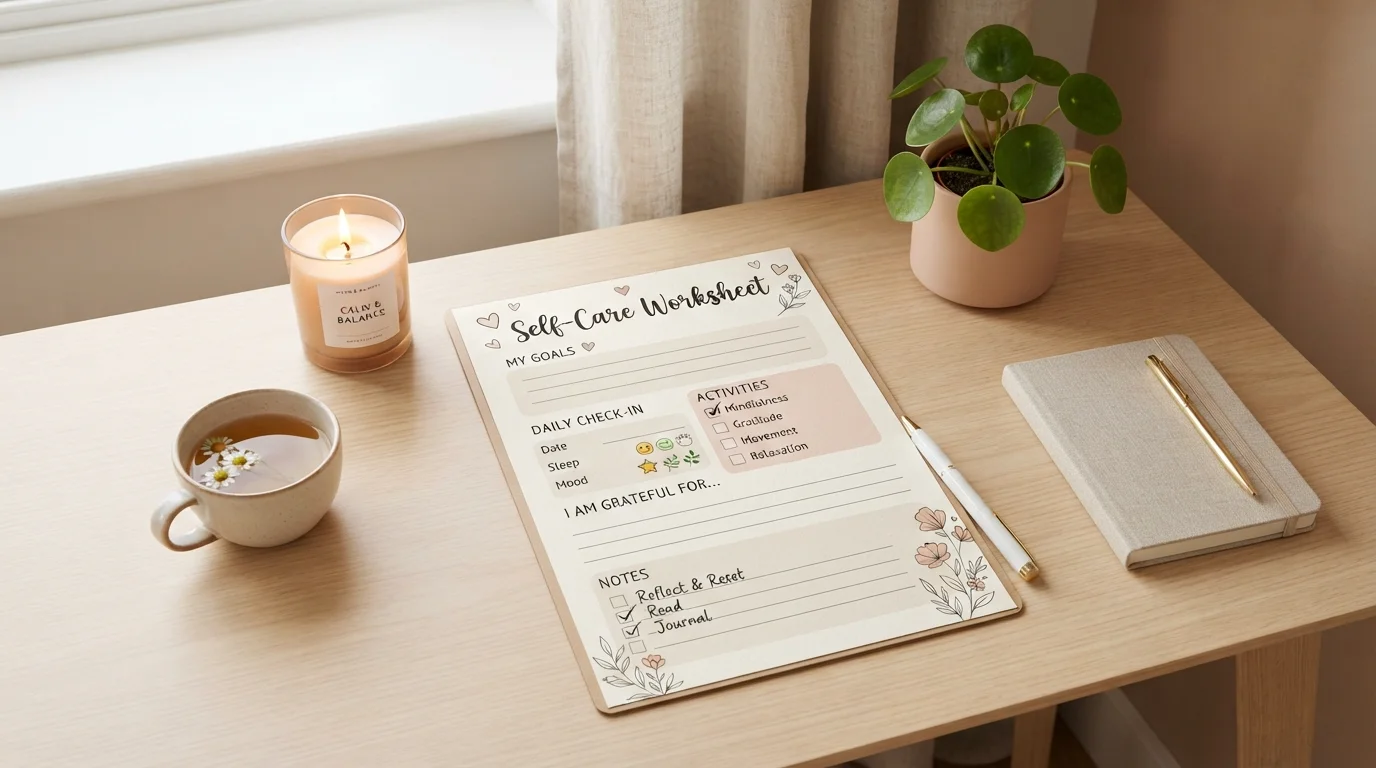
A self care worksheet is a structured, practical tool designed to help you assess, plan, and track your emotional well-being and daily habits. Instead of relying on vague intentions like “I should stress less,” a worksheet helps you break down your personal well-being into clear, achievable actions.
Think of it as a personal roadmap for your mental wellness. It allows you to organize your health priorities across different areas of life—such as physical health, emotional support, and mental rest—so you can easily spot where you feel drained and where you feel nourished.
Why It Matters Today
Modern life keeps most of us in a state of continuous alert. Constant digital notifications, long work hours, and personal obligations make it easy to drift through days on autopilot.
Without a deliberate reflection tool, we often miss the early signs of burnout. Research suggests that chronic stress can gradually impact sleep habits, weaken the immune system, and lower overall life satisfaction. Incorporating a structured healthy routine gives you space to pause, reflect, and make intentional choices rather than just reacting to constant demands.
Key Health & Lifestyle Benefits
Using a guided template to support your wellness journey offers several practical benefits:
- Clear Stress Management: Mapping out your daily responsibilities helps you spot specific triggers and apply relaxation techniques before feeling overwhelmed.
- Better Sleep Habits: Writing down your evening routine promotes relaxation, which evidence indicates can improve overall sleep quality.
- Improved Focus: Clearing mental clutter onto paper frees up brainpower, helping you stay present at work and home.
- Sustainable Work-Life Balance: Setting clear boundaries on paper makes it easier to protect your personal time without feeling guilty.
Common Types of Self-Care Practices
A complete self-care plan addresses more than just physical rest. Balancing these core pillars helps foster a truly healthy mindset:
- Physical: Nourishing your body with balanced meals, staying hydrated, engaging in light movement, and prioritizing restful sleep.
- Emotional: Expressing your feelings through journaling, practicing self-compassion, and speaking with supportive friends or family.
- Mental: Giving your brain a break from information overload through mindfulness, reading for fun, or engaging in creative hobbies.
- Social: Cultivating meaningful connection with people who uplift you while setting healthy boundaries with draining interactions.
Step-by-Step Action Plan to Use Your Worksheet
Follow these simple steps to make the most out of your self care worksheet:
- Assess Your Current Energy: Rate your energy and stress levels in key areas (physical, emotional, mental) on a scale of 1 to 5 to find where you need the most support.
- Choose One Focus Area: Pick a single area to improve first, such as establishing a calmer bedtime ritual or taking short midday breaks.
- Select Micro-Habits: Write down 1 to 2 tiny, specific actions. For instance, instead of “exercise more,” write “walk for 10 minutes after lunch.”
- Schedule Your Actions: Block out exact times in your calendar for these activities, treating them with the same importance as work meetings.
- Review and Adjust Weekly: Spend five minutes every Sunday reviewing what worked and adjusting what felt too difficult.
Best Practices for Building a Healthy Routine
Sustaining long-term progress comes down to consistency over perfection. Try these practical tips to keep your healthy living goals on track:
- Pair New Habits with Old Ones: Attach a new self-care habit to an existing routine, such as practicing deep breathing while waiting for your morning coffee to brew.
- Keep Action Steps Small: When time is tight, downsize your goal rather than skipping it entirely. Five minutes of stretching is far better than zero.
- Track How You Feel: Use your worksheet to write down how you feel after completing an activity. Noticing positive changes reinforces the habit.
Common Mistakes to Avoid
Even with the best intentions, it is easy to stumble when starting new self-improvement habits. Watch out for these common traps:
- Overhauling Everything at Once: Changing your entire schedule overnight often leads to frustration. Focus on one small habit at a time.
- Treating Self-Care as a Chore: If an activity feels like a stressful obligation, swap it for something you genuinely enjoy.
- Ignoring Personal Boundaries: Saying “yes” to every demand steals the energy you need for your own recovery. Learning to say a polite “no” is essential.
Myths vs. Facts About Self-Care
- Myth: Self-care is selfish and takes time away from my family or work obligations.
- Fact: Taking care of your health restores your patience and energy, allowing you to show up more effectively for the people who rely on you.
- Myth: Effective self-care requires expensive products or dedicated spa days.
- Fact: The most powerful forms of self-care—like adequate sleep, short walks, and boundary-setting—cost nothing.
- Myth: You only need self-care when you are experiencing extreme stress or burnout.
- Fact: Evidence indicates that practicing daily relaxation techniques helps build long-term resilience, preventing burnout before it starts.
Real-World Application: A Day in the Life
Consider Sarah, a 38-year-old working parent who constantly felt exhausted. Her days felt like an endless loop of preparing meals, meeting work deadlines, and tackling household chores.
Instead of attempting a drastic lifestyle change, Sarah downloaded a self care worksheet and made three tiny commitments:
- Drinking a full glass of water first thing in the morning.
- Taking a quiet 5-minute breather in her car before stepping inside after work.
- Turning off her phone screen 30 minutes before bed.
Within two weeks, these tiny adjustments significantly improved her sleep habits and lowered her daily stress. By using her worksheet to stay consistent, Sarah protected her personal well-being without neglecting her daily duties.
People Also Ask (FAQ Section)
How do I start using a self care worksheet if I am extremely busy?
Start by spending just two minutes every morning picking one tiny activity, such as drinking water or stepping outside for fresh air. Small, consistent choices are much easier to stick with than long, complicated routines.
What should be included in a complete self care worksheet?
A well-balanced worksheet should include space to check in on your emotional well-being, track basic physical needs like sleep and hydration, and list 1 or 2 small daily goals. It should serve as an encouraging planner rather than a stressful test.
How often should I update or review my self care template?
Reviewing your template briefly once a week helps you spot patterns, celebrate small wins, and adjust your goals to fit your changing schedule. Regular check-ins ensure your routine continues to support your lifestyle as life evolves.
Can a self care worksheet help reduce daily stress and anxiety?
Yes, organizing your thoughts and scheduling intentional breaks on paper can help calm an overactive mind and reduce feeling overwhelmed. Research suggests that tracking healthy habits promotes a stronger sense of control over your day.
Is self-care different from self-improvement?
Self-care focuses on preserving your energy, honoring your current limits, and managing stress, whereas self-improvement centers on learning new skills and reaching future goals. Both work together to help you build a balanced, fulfilling life.
Summary & Medical Disclaimer
Key Takeaways
- Start Small: Sustainable self-care is built on tiny daily actions, not radical lifestyle changes.
- Track Core Pillars: Support physical, emotional, and mental needs for true balance.
- Use Tools for Clarity: A structured worksheet helps remove guesswork and keeps you accountable.
- Prioritize Rest: Guarding your personal time helps prevent chronic fatigue and burnout.
Conclusion
Restoring your balance doesn’t require extra hours you don’t have. By using a simple self care worksheet, you can make meaningful wellness a natural part of your everyday life. Pick one small action step today, write it down, and give yourself permission to make your well-being a priority.

Hi, I’m Noah Richardson, the content writer behind LaxiBoost. I write about self-care and personal well-being to help people build healthier and more balanced lives. My goal is to turn trusted information, easy-to-follow advice that anyone can apply in daily life.
I believe self-care is more than an occasional activity it’s a lifelong habit that supports both mental and physical well-being. Through my articles, I share simple strategies, practical tips, and research-based insights to help you reduce stress, improve your daily routine, and take better care of yourself with confidence.
Thank you for reading LaxiBoost. I hope my content helps you create healthier habits and enjoy a happier, more balanced lifestyle.