Do you ever reach the end of the day feeling utterly drained, wondering where all your energy went? You check off endless work tasks, handle family needs, and manage household chores, yet somehow your own needs get pushed to tomorrow. When life gets chaotic, caring for yourself is often the first thing you drop.
Neglecting your personal well-being isn’t just about feeling tired. Over time, running on empty impacts your stress management, lowers your mood, disrupts sleep habits, and strains your relationships. It’s easy to feel guilty or assume you just need more willpower, but modern responsibilities leave very little room for rest.
The good news is that supporting your mental wellness doesn’t require hours of free time or elaborate routines. Small, intentional choices made consistently can restore your energy and bring balance back into your day. Using a dedicated tool can make these choices effortless.
In this guide, you’ll learn:
- How a self care planner helps streamline your personal well-being
- Realistic ways to fit daily habits into a busy schedule
- Practical strategies to protect your emotional well-being and stay consistent
What Is a Self Care Planner?
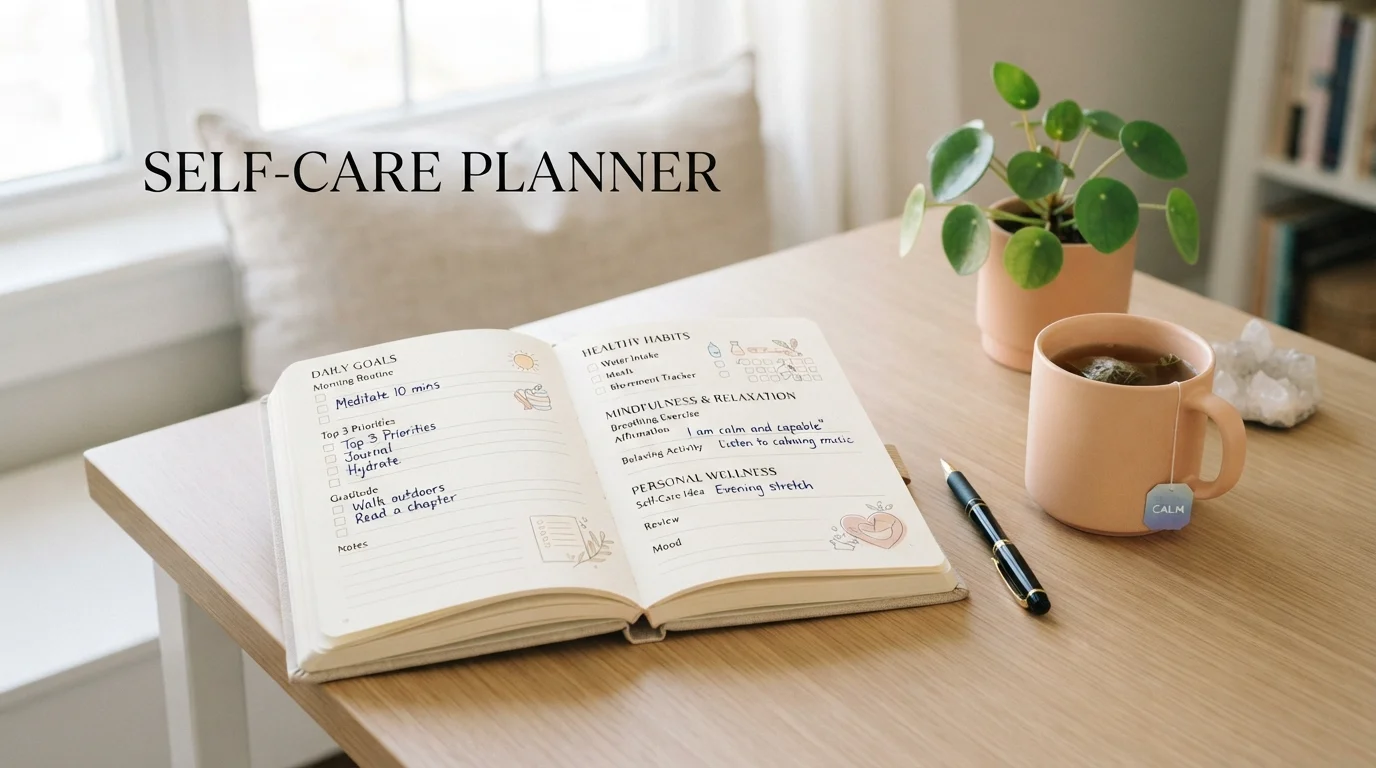
A self care planner is a targeted organization tool designed to help you prioritize your physical, mental, and emotional needs alongside your daily tasks. Unlike a standard work calendar that only tracks deadlines and appointments, this tool centers around your personal health and stress management goals.
It acts as a visual guide for your healthy lifestyle. By scheduling simple activities—like a brief morning walk, structured sleep habits, or five minutes of mindfulness—you transform self-care from a vague wish into a realistic, structured daily routine.
Why It Matters Today
Modern life moves fast, constantly pulling your attention toward digital notifications, work obligations, and external demands. Without clear boundaries, mental clutter builds up, leaving you feeling reactive rather than proactive.
| Modern Challenge | How Planning Helps |
| Information Overload | Clears mental clutter by externalizing your priorities. |
| Constant Distractions | Encourages intentional focus on personal well-being. |
| Work-Life Imbalance | Creates distinct boundaries between tasks and rest. |
Prioritizing your emotional well-being helps build resilience against daily burnout. When you intentionally design your schedule, you regain a sense of control over your time and overall health.
Key Health & Lifestyle Benefits
Incorporating structured personal care into your week produces tangible rewards for both body and mind.
- Improved Stress Management: Research suggests that writing down goals and tracking personal habits can lower cortisol levels by reducing the cognitive load on your brain.
- Better Sleep Habits: Setting aside evening time for relaxation techniques prepares your nervous system for rest, supporting better sleep quality.
- Sustained Motivation: Tracking small wins creates a positive feedback loop that helps maintain a healthy mindset without feeling overwhelmed.
- Enhanced Work-Life Balance: Clear schedules help you set firm boundaries, allowing you to protect your personal time without feeling guilty.
Common Approaches to Self-Care Planning
Different formats suit different lifestyles. Finding the right fit ensures that your planning tool supports you rather than feeling like extra work.
Physical Planners & Paper Journals
Paper formats offer a tactile experience free from screen distractions. Writing by hand supports mindfulness and gives your eyes a needed break from electronic devices.
Digital Planners & Apps
Digital layouts and mobile templates offer flexibility on the go. They work exceptionally well for set reminders, calendar integration, and quick adjustments during busy workdays.
Step-by-Step Action Plan
Starting a new routine should feel lightweight and approachable. Follow these sequential steps to set up your system efficiently.
1.Identify Core Focus Areas:Focus on 2–3 key areas to start.
Determine where you need the most support right now. Choose focus areas like sleep, hydration, movement, or emotional relaxation techniques.
2.Select Your Tool:Choose between paper or digital.
Pick a format that fits naturally into your existing life. If you prefer pen and paper, get a physical journal; if you live in your phone, choose a digital template.
3.Schedule Tiny Micro-Habits:Keep actions under 10 minutes.
Avoid overbooking your days. Block out short 5- to 10-minute slots for specific habits, such as a quick morning stretch or evening reading session.
4.Review and Adjust Weekly:Adapt your schedule to real life.
At the end of each week, look over what worked and what didn’t. Tweak your schedule based on your energy levels and changing priorities.
Best Practices & Daily Habits
To make your wellness journey sustainable, keep your expectations grounded in reality.
- Start Small: Focus on one micro-habit at a time, such as drinking a glass of water upon waking.
- Anchor to Existing Routines: Pair a new self-care habit with an existing behavior (e.g., practice three deep breaths while your morning coffee brews).
- Focus on Consistency Over Perfection: A five-minute walk done five days a week is far more effective than a two-hour workout done once a month.
- Keep It Visible: Leave your planner on your desk or nightstand so it serves as a gentle visual prompt throughout the day.
Common Mistakes to Avoid
Many people abandon their healthy routine because they fall into predictable traps early on.
- Over-Scheduling: Turning your wellness journey into a rigid, overwhelming task list destroys the purpose of stress relief.
- Ignoring Energy Levels: Forcing high-energy tasks during times when you naturally feel tired leads to quick frustration and burnout.
- Comparing Your Progress: Borrowing someone else’s elaborate schedule often leads to disappointment; your plan should reflect your unique life.
- Treating Rest as Earned: Rest is a biological requirement for personal well-being, not a reward that must be earned through productivity.
Myths vs. Facts
Myth: Self-care requires a lot of money and free time.
Fact: Practical self-care relies on simple daily habits like going to bed on time, taking short walks, or setting boundaries—none of which cost anything.
Myth: Planning every detail takes away spontaneity and fun.
Fact: Scheduling rest protects your free time, actually giving you more space and freedom to relax without worrying about unchecked tasks.
Myth: Using a self care planner is selfish when you have family obligations.
Fact: Taking care of your mental well-being ensures you have the emotional energy required to support others effectively.
Expert Perspective & Real-World Application
Consider Sarah, a working mother of two who constantly felt overwhelmed by mid-afternoon. She tried adding complex routines to her morning, but unexpected family demands always threw her off course.
Instead of quitting, Sarah simplified her approach using a practical self care planner. She focused on just two daily anchor habits: a 10-minute quiet coffee break before the kids woke up and a 5-minute screen-free wind-down before bed.
By scheduling these small, protected moments, Sarah significantly reduced her evening stress levels. Within a few weeks, her sleep habits improved, giving her more patience and sustained energy for both work and home life.
People Also Ask (FAQ Section)
How do I start using a self care planner?
Start by choosing a clean notebook or digital template and listing two simple habits you want to focus on this week. Keep your initial entries brief so the habit feels easy to maintain every day.
What should be included in a self care planner?
A complete setup should include daily habit trackers, short-term health goals, space for gratitude, and time slots for rest and relaxation techniques. It should also leave room to write down notes about your emotional well-being.
How often should I fill out my self care planner?
Checking your planner twice daily—for three minutes in the morning to set intentions and three minutes at night to reflect—works best for most people. This brief check-in keeps your goals clear without taking up precious time.
Can a self care planner help reduce stress?
Yes, externalizing your daily tasks and health goals onto paper reduces cognitive load and clears mental clutter. Research suggests that structured habit tracking supports better emotional balance and lowers everyday anxiety.
What is the difference between a regular planner and a self care planner?
A regular planner focuses primarily on external productivity, work deadlines, and external appointments. A self care planner prioritizes your personal well-being, emotional health, and rest schedules alongside daily tasks.
Summary & Medical Disclaimer
Key Takeaways
- A self care planner helps organize healthy routines and supports long-term emotional well-being.
- Focus on micro-habits and short, manageable time slots to build consistent stress management habits.
- Avoid over-scheduling and treat rest as a necessary part of your overall health.
- Review your progress weekly and adjust your plan to fit changing life circumstances.
Conclusion
Building a healthier, more balanced lifestyle doesn’t happen overnight, but small, intentional choices make a profound difference over time. By using a self care planner to safeguard your personal needs, you build a steady foundation for lasting health, peace of mind, and personal well-being. Start small today—pick one minor habit, write it down, and give yourself permission to take care of you.

Hi, I’m Noah Richardson, the content writer behind LaxiBoost. I write about self-care and personal well-being to help people build healthier and more balanced lives. My goal is to turn trusted information, easy-to-follow advice that anyone can apply in daily life.
I believe self-care is more than an occasional activity it’s a lifelong habit that supports both mental and physical well-being. Through my articles, I share simple strategies, practical tips, and research-based insights to help you reduce stress, improve your daily routine, and take better care of yourself with confidence.
Thank you for reading LaxiBoost. I hope my content helps you create healthier habits and enjoy a happier, more balanced lifestyle.