
Do you ever feel like you’re supposed to have it all together, no matter what? Maybe you’ve been taught to “man up,” push through pain, and never show vulnerability. These messages have been deeply ingrained in many men from a young age, such as “Big boys don’t cry,” or “Rub some dirt on it.”
The reality is that men do cry, men do experience emotional pain, and men do experience mental fatigue. Yet societal pressures and outdated stereotypes have discouraged many men from prioritizing their mental and emotional well-being.
Self-care for men isn’t about weakness; it’s about strength. It enhances your ability to be more productive, have better mental clarity, and find an improved overall quality of life.
The good news? Self-care doesn’t have to be complicated or time-consuming. Simple, consistent habits can make a real difference in how you feel.
In this guide, you’ll discover:
- Why self-care matters for men
- Practical physical self-care ideas
- Mental and emotional wellness practices
- Simple habits that fit your lifestyle
Let’s explore how you can start caring for yourself without adding more stress to your plate.
Why Self-Care Matters for Men
Men live in a fast-paced, high-pressure world today. Stress levels and mental health challenges are on the rise everywhere, making the need for self-care even more essential.

The statistics are sobering:
- Men are 4 times more likely than women to take their own life
- An estimated 1 out of 10 men have symptoms of anxiety or depression
- Less than half of those men receive treatment
- Over six million men suffer from depression each year
When men don’t practice self-care, the impact can have a ripple effect that leads to burnout, chronic stress, and a decline in physical health. Prioritizing your well-being allows you to maintain your physical, mental, and emotional health, leading to a more balanced and fulfilling life.
Engaging in self-care doesn’t diminish your strength it enhances it.
Breaking the Stigma
Many men equate self-care with weakness or “feminine indulgence.” This mindset has been reinforced by cultural messages that men should be tough and not show vulnerability.

Common barriers men face:
- Cultural stigma. Men are often expected to “bottle it up” or deal with problems “like a man.”
- Fear of vulnerability. Being honest about mental or emotional pain requires vulnerability, something that is too often stigmatized for men.
- Lack of awareness. Many men simply weren’t taught how to prioritize their well-being.
“Many cultures stigmatize men’s expression of emotion,” says De’Von Patterson, PhD, a psychologist with Baptist Behavioral Health. But the reality is different: there is no strength in suffering in silence, and there is no shame in acknowledging that you need help.
Self-care is gender-neutral. It’s about taking time to focus on yourself, and that’s something every person needs.
Physical Self-Care Ideas
Looking after your body is the foundation of well-being. Here are simple ways to nurture your physical health.

Engage in Regular Exercise
Working out is one of the best ways to care for your body and mind. Whatever workout routine you enjoy, weightlifting, running, yoga, swimming, or hiking, exercise reduces stress by releasing endorphins, the feel-good hormones.
Daily exercise produces stress-relieving hormones that benefit overall health, both physically and mentally. But physical activity isn’t only relegated to the gym. It can be as simple as getting out of the house and taking a stroll around the neighborhood.
Prioritize Quality Sleep
Sleep and mental health are closely connected. Getting quality sleep is crucial to your mental well-being and overall health. Sleep helps your body recover, improves cognitive function, and boosts mood.
Sleep tips:
- Establish a healthy routine: go to bed and get up at the same time every day
- Limit screen time before bed
- Create a peaceful and quiet environment to fall asleep in
Meal-Prep Healthy Food Options
If you struggle to fuel your body with nutritious food, meal prepping can be a game-changer. Eating a balanced diet involves making mindful choices throughout the week, and preparing meals ahead of time helps when you’re busy.
Go for a Walk
Even a short walk can do wonders for your body and mind. Take a stroll through the park or go on a brisk walk around the neighborhood. Spending time in nature can clear your mind and boost your mood.
Mental and Emotional Self-Care
Caring for your mind is just as important as caring for your body.

Take Care of Your Mental Health
Prioritizing mental health is just as crucial as taking care of yourself physically. This is especially true for men, as addressing mental health concerns early can prevent long-term issues.
If you feel overwhelmed with stress or anxiety, therapy can be a powerful form of self-care. Therapy provides a safe place to explore your emotions and get guidance on navigating difficult situations. It’s also where you can learn effective coping and stress management techniques.
Meditate to Clear Your Mind
Meditation is a powerful addition to your self-care routine. It will help clear your mind and reduce stress. It only takes a few minutes a day to see benefits, and you can improve focus, increase self-awareness, and find a sense of comfort that will benefit you throughout your busy days.
Just a few minutes of meditation every day can help ease anxiety, reduce stress, and improve sleep. As you become more skilled in meditation, you’ll enjoy even more benefits like greater self-awareness and improved attention.
Start journaling.
Research shows that journaling is good for mental health. Writing things down can give you clarity and help you track personal growth. Journaling is also an effective way to identify triggers contributing to stress in men. Try to journal a few minutes to start or end your day.
Practice Mindfulness
Mindfulness is about tuning into your thoughts, feelings, and bodily sensations with curiosity and acceptance. It is a way of giving yourself permission to acknowledge and give priority to what you are feeling in the moment. Think of it as a mental workout that strengthens your ability to focus, regulate emotions, and navigate life’s challenges.
Manage Your Emotions
Although it can be challenging, learning to manage your emotions and express them in a healthy way is an effective part of self-care. Take the time to slow down and reflect on what you’re feeling. Don’t be afraid to ask for help if you’re struggling to cope.
Skincare and Grooming Rituals
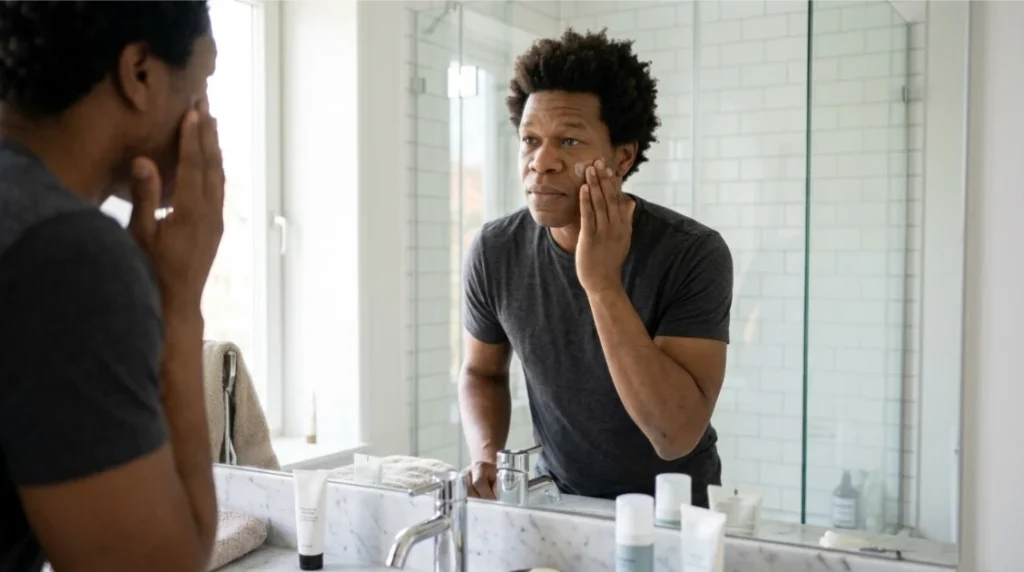
Skincare and grooming are often overlooked forms of self-care for men. But they’re about more than appearance; they’re about protecting your skin, feeling confident, and knowing that looking after yourself is essential.
Simple Skincare Routine
A basic skincare routine for men includes just a few simple steps:
1. Cleanse: Wash your face with a cleanser morning and night to remove impurities and excess oil. Men have higher testosterone levels, which can make the skin up to 25 percent thicker and oilier, so finding the right cleanser matters.
2. Moisturize: Apply a moisturizer after cleansing to hydrate your skin and keep it looking healthy. Lightweight, fast-absorbing formulas work best for men’s skin.
3. Apply SPF: Sunscreen is non-negotiable. Sun exposure is the #1 cause of dark spots, premature aging, and skin irritation. Use a broad-spectrum SPF 30+ daily, even on cloudy days.
Grooming Rituals
Creating a grooming ritual if it’s a shaving routine, styling your hair, or a skincare regimen is a rewarding and confidence-boosting form of self-care. Having a ritual around grooming can help you feel refreshed and ready for your day or night.
Shaving Tips
Shaving can cause ingrown hairs, irritation, and blemishes without the right measures. Use a clean, sharp razor and always follow with a soothing post-shave balm to calm your skin.
Connecting with Others
Social connection is key to mental well-being. As humans, we are social beings. Spending time with loved ones and building meaningful relationships helps to form a sense of connectedness and belonging.

Connect with Friends and Family
Making an effort to stay connected with important people in your life is crucial to self-care and preventing loneliness. Spending time with friends, family, and loved ones who support you ensures you don’t feel isolated.
“Support and social connection are important, especially when we talk about mental health because men have historically been taught to suppress their emotions,” says Talkspace therapist Famous Erwin, LMHC.
Give Back to Others
Giving back can improve your mental and physical health. Sign up to volunteer with an organization that has a mission that inspires you.
It’s Okay to Talk
If you are experiencing symptoms like aggression, irritability, mood changes, sleep and appetite changes, sadness, numbness, or suicidal thoughts, these may be signs that it is time to ask for some help. That could mean calling or texting 988 to speak with a trained counselor. It could also mean therapy or medication if warranted.
Frequently Asked Questions
1. Why is self-care important for men?
Self-care helps reduce stress, supports mental and emotional well-being, prevents burnout, and empowers men to take control of their lives. Men are 4 times more likely than women to die by suicide, making self-care essential.
2. Is self-care for men selfish?
No. Self-care isn’t selfish; it’s essential. When you take care of yourself, you’re better able to care for others. It’s like the oxygen mask principle: you need to take care of yourself first.
3. What are simple self-care ideas for men?
Simple ideas include regular exercise, quality sleep, meditation, journaling, connecting with friends, creating a grooming ritual, and going for walks.
4. Do men need skincare?
Yes. Men’s skin can be up to 25 percent thicker and oilier than women’s, making specific skincare important. A simple routine includes cleansing, moisturizing, and applying SPF daily.
5. How do I start a self-care routine?
Start small. Choose one or two practices that resonate with you, like a daily walk or a few minutes of meditation. Schedule them into your day, be consistent, and gradually add more.
6. Is therapy helpful for men?
Yes. Therapy can be a powerful form of self-care. It provides a safe place to explore emotions, get guidance, and learn effective coping and stress management techniques.
7. What does the research say about self-care for men?
Research shows that consistent self-care practices reduce stress, improve mental clarity, and build resilience. Studies also show that individuals who practice gratitude have lower levels of depression.
Key Takeaways
- Self-care for men isn’t selfish or weak; it’s essential for physical and mental health
- Men are 4 times more die by suicide, making mental health care critical
- Simple habits like exercise, sleep, meditation, and journaling make a real difference
- Skincare and grooming rituals are valuable forms of self-care
- Social connection and asking for help are signs of strength, not weakness
- Start small, be consistent, and give yourself permission to prioritize your well-being, more likely to

Conclusion
Self-care for men isn’t about weakness; it’s about strength. It’s about recognizing that you are worth caring for and that taking care of yourself allows you to show up better for the people who depend on you.
As one expert puts it, “There is no strength in suffering in silence, and there is no shame in acknowledging that you need help.”
Start with one practice from this guide today. Just one. Take a walk. Call a friend. Write down what’s on your mind. Get an extra hour of sleep.
Small actions, repeated consistently, create meaningful change. You deserve to feel your best. And it starts with simple choices you can make today.
Ready to Prioritize Your Well-Being?
Choose one self-care idea from this guide and commit to it for the next seven days. Write it down, set a reminder, and notice how you feel. Your future self will thank you.
Medical Disclaimer
This article is for educational and informational purposes only and is not medical advice. Always consult with a qualified healthcare provider regarding any health concerns.

Hi, I’m Noah Richardson, the content writer behind LaxiBoost. I write about self-care and personal well-being to help people build healthier and more balanced lives. My goal is to turn trusted information, easy-to-follow advice that anyone can apply in daily life.
I believe self-care is more than an occasional activity it’s a lifelong habit that supports both mental and physical well-being. Through my articles, I share simple strategies, practical tips, and research-based insights to help you reduce stress, improve your daily routine, and take better care of yourself with confidence.
Thank you for reading LaxiBoost. I hope my content helps you create healthier habits and enjoy a happier, more balanced lifestyle.