Have you ever reached the end of a long day, collapsed onto the couch, and realized you had absolutely zero energy left for yourself? Between work demands, family needs, and a endless to-do list, putting your own needs on the back burner is all too easy.
When you constantly run on empty, stress builds up fast. Over time, ignoring your personal well-being can drain your mood, disrupt your sleep habits, and leave you feeling completely exhausted. But taking care of yourself does not require an expensive spa day or hours of free time you simply do not have.
Instead, real comfort can start with small, daily habits. A personalized self-care basket keeps your favorite relaxation tools in one easily accessible spot, making intentional rest achievable—even on your busiest days. Research suggests that simple, tactile routines can help lower stress levels and support a healthy mindset.
In this guide, you’ll learn:
- What a self-care basket is and why it works
- Practical items to include for physical and emotional comfort
- Simple steps to build your own basket on any budget
- Easy ways to turn your basket into a consistent, daily habit
Let’s explore how a simple basket of comfort items can help you reclaim your peace and rebuild your healthy routine.
Core Article Body
What Is a Self-Care Basket?
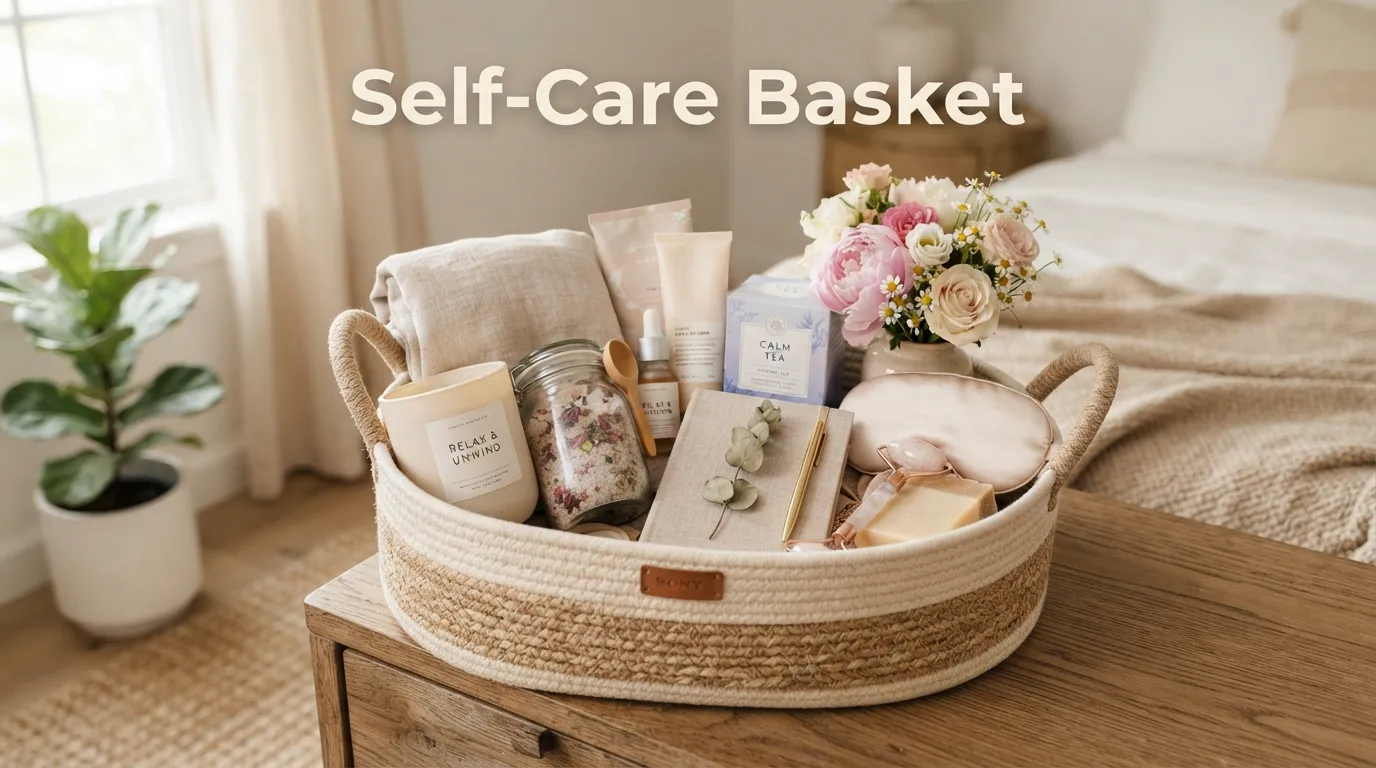
A self-care basket is a physical container filled with curated items that help you relax, recharge, and feel grounded. Think of it as a personalized kit designed to support your mental wellness and emotional well-being.
Rather than searching through drawers for a candle, journal, or hand lotion when you feel overwhelmed, everything stays organized in one dedicated space. It serves as a visual reminder to take a break and care for yourself.
Why a Self-Care Routine Matters Today
Modern life moves quickly, and constant digital notifications can keep your nervous system on high alert. Without boundaries, chronic busyness can compromise your work-life balance and overall personal well-being.
Creating a physical touchpoint for relaxation helps interrupt the daily cycle of stress. Evidence indicates that sensory cues—such as a calming scent, a soft texture, or a warm cup of tea—can signal safety to your brain, making it easier to unwind.
Key Health & Lifestyle Benefits
Integrating a self-care basket into your healthy routine offers several practical benefits:
- Lowers Everyday Stress: Having comforting tools nearby encourages brief, regular breaks that lower tension.
- Improves Sleep Habits: Using calming items before bed can help signal to your body that it is time to rest.
- Supports Emotional Balance: Journaling or practicing mindfulness tools from your basket can help process difficult emotions.
- Encourages Healthy Mindset Shifts: Keeping a basket visible shifts self-care from a luxury to an accessible, daily habit.
Common Types of Self-Care Baskets
You can customize your basket based on what your mind and body need most on any given day.
1. The Unwind & Sleep Basket
Focuses on night-time relaxation and wind-down routines.
- Herbal teas (like chamomile or lavender)
- An eye mask and soft socks
- Pillow spray or essential oils
- A cozy blanket
2. The Mindful Focus Basket
Designed for mental clarity, stress management, and emotional processing.
- A guided journal and smooth pens
- Affirmation cards
- Fidget tools or grounding stones
- A favorite non-fiction book
3. The Physical Comfort & Spa Basket
Created for physical relaxation and pampering at home.
- Hydrating hand cream and lip balm
- Sheet masks or bath soaks
- A compact wooden massager
- A warm water bottle or heating pad
Step-by-Step Action Plan: Building Your Basket
Building a self-care basket is simple and does not require spending a lot of money. Follow these simple steps to start:
- Choose Your Container: Find an unused basket, wooden crate, or fabric bin around your home. Select something portable that fits nicely near your favorite seat or nightstand.
- Gather Sensory Items: Pick 4 to 6 items that appeal to your senses. Include something soft to touch, something pleasant to smell, and something calming to read or do.
- Keep It Accessible: Place your basket in an open, visible location where you spend your downtime, like next to the sofa or on your bed stand.
- Set a Time Limit: Aim to spend just 10 to 15 minutes with your basket each evening to make the habit stick.
Best Practices for Daily Use
To get the most out of your self-care journey, keep these everyday tips in mind:
- Rotate Your Items: Swap out products seasonally or when you get bored to keep the experience fresh.
- Keep It Simple: Do not overfill your container; clutter can increase stress rather than relieve it.
- Combine Habits: Pair your basket time with an existing routine, like drinking your evening tea or listening to quiet music.
Common Mistakes to Avoid
- Making It Too Complicated: Buying dozens of new items can feel overwhelming. Start with things you already own.
- Treating It Like a Chore: If opening your basket feels like another task on your checklist, simplify the items inside.
- Waiting for a Crisis: Use your basket regularly to maintain stress levels, rather than waiting until you feel completely burned out.
Myths vs. Facts About Self-Care
- Myth: Self-care requires spending lots of money on luxury goods.
- Fact: Effective self-care relies on simple, restful habits. You can build a wonderful basket using items you already have at home.
- Myth: Taking time for yourself is selfish.
- Fact: Caring for your emotional well-being ensures you have the energy and patience needed to support others.
- Myth: You need hours of free time for self-care to work.
- Fact: Even five minutes of intentional relaxation using your basket can help calm your nervous system.
Expert Perspective & Real-World Application
Imagine coming home after a demanding day at work. Instead of spending an hour scrolling mindlessly through your phone, you pick up your self-care basket placed on your living room table.
You light a calming candle, apply a soothing hand cream, and spend ten minutes writing down your thoughts in a journal. This small shift transforms passive screen time into active, nourishing rest, setting a peaceful tone for the rest of your evening.
People Also Ask (FAQ Section)
What should I put in a basic self-care basket?
A simple self-care basket should include items that calm your senses, such as a cozy blanket, a comforting scent, a journal, and a warm beverage. Choose four to six meaningful items that bring you immediate comfort and ease.
How much does it cost to make a self-care basket?
You can make a self-care basket for little to no cost by gathering items you already own around your home. If purchasing new items, budget-friendly choices like drugstore lotions, herbal teas, and simple notebooks work exceptionally well.
How often should I use my self-care basket?
Using your self-care basket daily, even for just 5 to 10 minutes, yields the best results for stress management. Regular use helps build a consistent, healthy routine that supports long-term emotional well-being.
Can a self-care basket help with anxiety?
Using comforting items in a self-care basket can provide a grounding sensory experience that helps manage mild everyday stress and tension. However, it is an everyday lifestyle tool and should not replace professional mental health care.
What is a good self-care basket idea for a friend?
A great self-care basket for a friend focuses on relaxation and thoughtful comfort, such as gourmet tea, a soft throw blanket, a hand cream, and a personalized note. Tailor the items to their specific hobbies and favorite sensory scents.
Summary & Medical Disclaimer
Key Takeaways
- A self-care basket keeps your favorite relaxation tools organized and accessible in one place.
- Focus on sensory items that support your physical comfort, sleep habits, and emotional health.
- Building a basket can be completely low-cost using everyday items you already own.
- Small, consistent daily interactions with your basket are more effective than occasional, long sessions.
Conclusion
Taking care of your health and personal well-being does not require a dramatic lifestyle overhaul. By assembling a dedicated self-care basket, you create a soft landing spot for stressful days. Start small today: find a simple container, add two or three comforting items, and grant yourself a few quiet moments to unwind.

Hi, I’m Noah Richardson, the content writer behind LaxiBoost. I write about self-care and personal well-being to help people build healthier and more balanced lives. My goal is to turn trusted information, easy-to-follow advice that anyone can apply in daily life.
I believe self-care is more than an occasional activity it’s a lifelong habit that supports both mental and physical well-being. Through my articles, I share simple strategies, practical tips, and research-based insights to help you reduce stress, improve your daily routine, and take better care of yourself with confidence.
Thank you for reading LaxiBoost. I hope my content helps you create healthier habits and enjoy a happier, more balanced lifestyle.